Decoding 5G Advanced: Maximize US Network Speeds by Q3 2026

The landscape of wireless communication is on the cusp of another monumental transformation with the advent of 5G Advanced. For US consumers and businesses alike, this evolution promises not just incremental improvements, but a profound shift in how we interact with the digital world. By Q3 2026, the widespread deployment of 5G Advanced is expected to unlock unprecedented network speeds, significantly enhance connectivity, and pave the way for a new generation of innovative applications. This comprehensive guide delves into what 5G Advanced entails, its anticipated impact on the US, and crucially, how you can prepare to maximize these new capabilities.
Understanding the Leap: What is 5G Advanced?
Before we explore how to maximize 5G Advanced US speeds, it’s essential to understand what this technology truly represents. 5G Advanced, formally known as 3GPP Release 18 and beyond, is not a brand new generation of wireless technology like the jump from 4G to 5G. Instead, it’s a significant enhancement and evolution of the existing 5G standard. Think of it as 5G on steroids – more intelligent, more efficient, and far more capable.
The Core Pillars of 5G Advanced
Several key technological advancements underpin 5G Advanced:
- Enhanced Mobile Broadband (eMBB) Evolution: While 5G already offers impressive speeds, 5G Advanced pushes the boundaries further. It optimizes spectrum utilization, employs more sophisticated Massive MIMO (Multiple Input, Multiple Output) techniques, and introduces advanced beamforming to deliver even higher peak speeds and more consistent performance, especially in dense urban environments. This means faster downloads, smoother streaming of 8K video, and virtually lag-free cloud gaming.
- Ultra-Reliable Low-Latency Communications (URLLC) for Critical Applications: 5G Advanced refines URLLC capabilities, crucial for mission-critical applications. This includes advancements for industrial automation, autonomous vehicles, remote surgery, and smart grids, where even a millisecond of delay can have significant consequences. The latency will be driven down to near-zero, making real-time control and feedback loops possible on a grand scale.
- Massive Machine Type Communications (mMTC) for IoT at Scale: The Internet of Things (IoT) is set to explode with billions of connected devices. 5G Advanced is designed to efficiently support an even denser concentration of IoT devices, consuming minimal power and ensuring long battery life for sensors and smart gadgets. This will enable smart cities, smart agriculture, and widespread industrial IoT deployments without network congestion.
- AI and Machine Learning Integration: A defining characteristic of 5G Advanced is its deep integration with Artificial Intelligence (AI) and Machine Learning (ML). AI will be used to optimize network performance dynamically, predict traffic patterns, manage resources more efficiently, and even enhance security. This intelligent network management will lead to a more robust, self-optimizing, and resilient infrastructure.
- Extended Reality (XR) Enhancements: Virtual Reality (VR), Augmented Reality (AR), and Mixed Reality (MR) – collectively known as XR – demand immense bandwidth and ultra-low latency. 5G Advanced will provide the necessary infrastructure to deliver truly immersive and interactive XR experiences, from collaboration in virtual spaces to highly realistic gaming and training simulations.
- Energy Efficiency: As networks become more complex and powerful, energy consumption is a growing concern. 5G Advanced incorporates new features and optimizations aimed at significantly reducing the energy footprint of base stations and network operations, contributing to a more sustainable digital future.
The US Landscape: Readiness for 5G Advanced by Q3 2026
The United States has been a frontrunner in 5G deployment, and this momentum is expected to carry into the 5G Advanced era. Several factors indicate a strong readiness for the widespread adoption of 5G Advanced US capabilities by Q3 2026.
Key Drivers for US Adoption
- Spectrum Availability: The FCC has been actively working to make more mid-band and millimeter-wave (mmWave) spectrum available, which are crucial for achieving the high speeds and low latency promised by 5G Advanced. Continued auctions and reallocations will ensure carriers have the necessary airwaves.
- Infrastructure Investment: Major US carriers (Verizon, AT&T, T-Mobile) have already invested billions in their 5G networks. This foundational infrastructure provides a strong base for upgrading to 5G Advanced. Investments will continue in denser small cell deployments, fiber backhaul, and intelligent network slicing capabilities.
- Technological Innovation: The US is home to many leading technology companies and research institutions that are at the forefront of developing 5G Advanced technologies, from chipsets to software and network equipment. This robust ecosystem fosters rapid innovation and deployment.
- Consumer and Business Demand: There’s a clear and growing demand for faster, more reliable connectivity across all sectors. Consumers want seamless streaming and gaming, while businesses are looking to leverage advanced connectivity for automation, remote operations, and data analytics. This demand will drive carriers to accelerate their 5G Advanced US rollout.
- Government Initiatives: Federal and state governments are recognizing the strategic importance of advanced wireless infrastructure. Initiatives aimed at bridging the digital divide and promoting technological leadership will further support 5G Advanced deployment.
Anticipated Timeline and Coverage
While a full nationwide rollout of all 5G Advanced features might extend beyond Q3 2026, significant progress is expected. By this timeframe, we anticipate:
- Major Urban and Suburban Areas: These will likely see the most comprehensive 5G Advanced coverage, with enhanced speeds and lower latency becoming commonplace.
- Key Industrial Corridors: Areas with high concentrations of manufacturing, logistics, and technology industries will be prioritized for URLLC and mMTC advancements to support enterprise applications.
- Early Adopter Devices: New smartphones, tablets, and IoT devices compatible with 5G Advanced specifications will be readily available, allowing early adopters to experience the benefits.
Maximizing Your 5G Advanced Experience: A Consumer’s Guide
As 5G Advanced becomes a reality in the US, consumers will need to take certain steps to fully harness its power. Here’s how you can prepare to maximize your 5G Advanced US network speeds by Q3 2026.
1. Upgrade to a 5G Advanced Compatible Device
The most fundamental step is ensuring your hardware can support the new capabilities. Not all 5G devices are created equal. As 5G Advanced rolls out, new chipsets and modems will be required to take full advantage of its features. When purchasing a new phone or mobile hotspot in the coming years, look for:
- 3GPP Release 18 Compliance: Device specifications will start listing compatibility with specific 3GPP releases. Aim for devices that explicitly support Release 18 or later.
- Advanced Modem Technology: Look for devices featuring the latest generation of 5G modems from manufacturers like Qualcomm (Snapdragon X series), MediaTek, or Intel, which are designed to support 5G Advanced features.
- Support for Wider Spectrum Bands: Ensure the device supports a broad range of 5G spectrum bands, including both mid-band (C-band, CBRS) and mmWave, as these are critical for achieving peak 5G Advanced US speeds.
Upgrading your device will be crucial, as older 5G phones may only support earlier iterations of 5G and won’t be able to tap into the full suite of 5G Advanced enhancements.
2. Choose the Right Carrier and Plan
Network performance can vary significantly between carriers and even within different regions of the same carrier. To maximize your 5G Advanced US experience:
- Research Carrier Coverage: As Q3 2026 approaches, carriers will be heavily marketing their 5G Advanced coverage. Use their official coverage maps and independent third-party reports to determine which carrier offers the best 5G Advanced availability in your frequently visited areas.
- Opt for 5G Advanced-Enabled Plans: Some carriers might introduce specific premium plans designed to unlock the full potential of 5G Advanced, potentially offering higher data caps, prioritized traffic, or access to specific services. Review your plan options carefully.
- Consider Business-Specific Solutions: If you’re a business, explore enterprise-grade 5G Advanced solutions that might include network slicing for dedicated bandwidth, enhanced security features, and managed IoT connectivity.
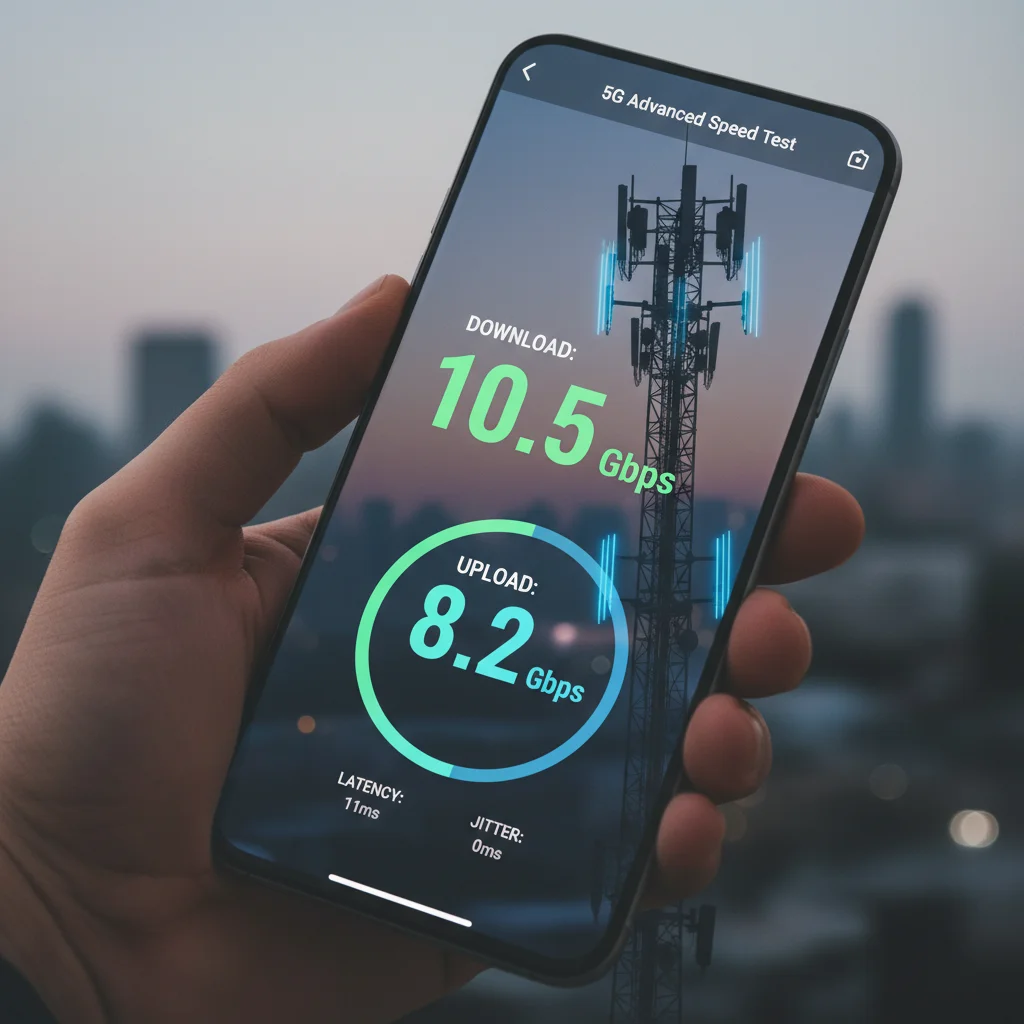
3. Leverage New Applications and Services
The true power of 5G Advanced isn’t just in faster speeds, but in the new possibilities it unlocks. To maximize your experience, explore and adopt new applications and services that are built to leverage these capabilities:
- Immersive XR Experiences: Dive into high-fidelity VR and AR applications for gaming, education, and professional collaboration. With ultra-low latency and high bandwidth, these experiences will feel more real and responsive than ever before.
- Cloud Gaming and Computing: Stream graphically intensive games directly from the cloud with virtually no lag, eliminating the need for expensive local hardware. Similarly, complex computational tasks can be offloaded to cloud servers, making even basic devices powerful.
- Advanced IoT and Smart Home Devices: Integrate more sophisticated smart home devices that rely on real-time data and constant connectivity. This could include advanced security systems, smart appliances, and health monitoring devices that benefit from URLLC.
- Enhanced Remote Work and Collaboration: Experience seamless video conferencing with multiple participants, instant file sharing, and access to cloud-based enterprise applications without any performance hitches, making remote work more productive.
- Personalized and Context-Aware Services: As AI integrates deeper into the network, expect more personalized services that anticipate your needs based on location, time, and preferences, delivered with unmatched responsiveness.
4. Optimize Your Home Network and Wi-Fi
While 5G Advanced focuses on cellular connectivity, your home network still plays a critical role. Many devices will continue to connect via Wi-Fi, and a robust internal network ensures the 5G Advanced US speeds aren’t bottlenecked at your router.
- Upgrade to Wi-Fi 6E or Wi-Fi 7: These latest Wi-Fi standards are designed to handle multi-gigabit speeds and lower latency, complementing the capabilities of 5G Advanced.
- Consider a 5G Home Internet Solution: If 5G Advanced home internet becomes available in your area, it could offer a compelling alternative to traditional fiber or cable, delivering lightning-fast speeds directly to your home.
- Ensure Adequate Router Placement: Position your Wi-Fi router optimally to minimize interference and maximize signal strength throughout your home.
5. Stay Informed and Adapt
The world of wireless technology is constantly evolving. To consistently maximize your 5G Advanced US experience:
- Follow Industry News: Keep an eye on announcements from carriers, device manufacturers, and industry bodies regarding 5G Advanced developments and new services.
- Monitor Your Data Usage: With significantly faster speeds, it’s easy to consume more data. Monitor your usage and adjust your plans as needed to avoid overage charges.
- Provide Feedback: As an early adopter, your feedback can help shape the future of 5G Advanced deployment and service offerings.
The Broader Impact of 5G Advanced on the US
Beyond individual consumer benefits, the widespread adoption of 5G Advanced US technology by Q3 2026 will have a transformative impact on various sectors and the economy as a whole.
Economic Growth and Innovation
5G Advanced is poised to be a significant engine for economic growth. It will foster innovation across industries, leading to the creation of new businesses, services, and job opportunities. Sectors like manufacturing, healthcare, logistics, and entertainment will see productivity boosts and new operational efficiencies.
Smart Cities and Infrastructure
The enhanced capabilities of 5G Advanced will accelerate the development of smart cities. This includes intelligent traffic management systems, connected public safety solutions, smart utilities, and environmental monitoring, all contributing to more efficient, sustainable, and livable urban environments.
Healthcare Revolution
In healthcare, 5G Advanced will enable more advanced telemedicine, remote patient monitoring with real-time data, and even remote-assisted surgery with precision and minimal latency. This could significantly improve access to care, especially in rural or underserved areas.

Autonomous Systems and Transportation
The ultra-reliable low-latency communication of 5G Advanced is critical for the safe and efficient operation of autonomous vehicles and drones. It will allow for real-time communication between vehicles, infrastructure, and central control systems, paving the way for fully autonomous transportation networks.
Bridging the Digital Divide
While urban areas will likely see the earliest and most comprehensive deployment, 5G Advanced, particularly through solutions like fixed wireless access (FWA), has the potential to bring high-speed internet to rural and remote communities that have historically lacked adequate broadband options. This could significantly reduce the digital divide and foster greater equity in access to information and opportunities.
Challenges and Considerations
Despite the immense promise, the path to full 5G Advanced US deployment is not without its challenges.
- Infrastructure Density: Achieving the full potential of 5G Advanced, especially mmWave, requires a very dense network of small cells. This involves significant investment, regulatory hurdles for placement, and community acceptance.
- Security Concerns: As networks become more complex and interconnected, ensuring robust cybersecurity is paramount. 5G Advanced will need to incorporate advanced security protocols to protect sensitive data and critical infrastructure from evolving threats.
- Standardization and Interoperability: While 3GPP sets global standards, ensuring seamless interoperability between different vendors’ equipment and devices can be complex. Continued collaboration across the industry is essential.
- Device Adoption: The pace at which consumers upgrade to 5G Advanced-compatible devices will influence the overall impact and perceived value of the new technology.
- Spectrum Harmonization: Consistent and harmonized spectrum policies are needed to ensure that carriers can efficiently deploy and optimize their 5G Advanced networks.
Conclusion: The Future is Fast with 5G Advanced US
The journey towards 5G Advanced is an exciting one, promising a future where connectivity is not just faster, but also smarter, more reliable, and more energy-efficient. By Q3 2026, US consumers can realistically expect to experience a significant uplift in network performance, unlocking a plethora of new applications and services that were once the realm of science fiction.
To truly maximize these unparalleled 5G Advanced US speeds and capabilities, proactive steps are necessary. Investing in compatible devices, choosing the right carrier plans, and embracing the innovative applications that leverage this technology will be key. As the infrastructure continues to evolve, 5G Advanced will not only transform our personal digital lives but also drive economic growth, foster smart cities, revolutionize healthcare, and propel us into an era of unprecedented technological advancement. Get ready to connect to the future.