Next-Gen Gaming Accessories: US Sales Projections for Late 2026
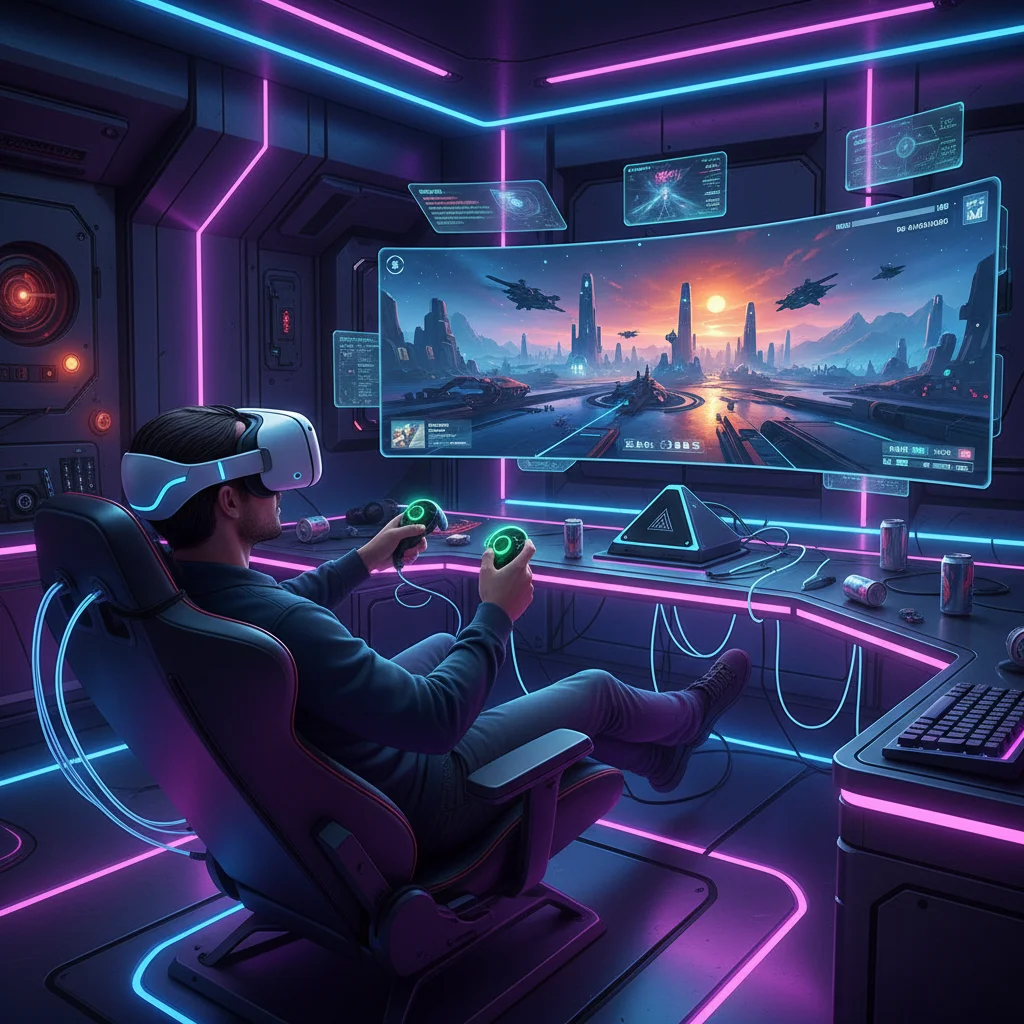
The gaming industry is a relentless innovator, constantly pushing the boundaries of technology to deliver more immersive, engaging, and personalized experiences. As we hurtle towards late 2026, the landscape of gaming accessories is set to undergo a significant transformation. Forget your standard controllers and headsets; the next wave of peripherals promises to redefine how we interact with our favorite virtual worlds. This article delves deep into the insider knowledge surrounding the next-gen gaming accessories that are projected to dominate US sales by late 2026, offering a glimpse into the future of interactive entertainment.
The market for gaming accessories has always been robust, driven by a passionate community eager to enhance their gameplay. However, the coming years will see a shift from incremental upgrades to revolutionary leaps. Factors such as advancements in virtual reality, haptic technology, artificial intelligence, and cloud computing are converging to create a new generation of devices that offer unparalleled immersion and responsiveness. Understanding these trends is crucial for both consumers looking to stay ahead of the curve and industry professionals aiming to capitalize on emerging opportunities.
Our analysis, based on industry reports, market research, and expert predictions, identifies four key categories of next-gen gaming accessories that are not only gaining traction but are also forecast to capture a significant share of the US market by the end of 2026. These aren’t just minor improvements; they represent fundamental shifts in how we play, perceive, and participate in gaming. Let’s explore these game-changing innovations.
1. Advanced Standalone VR Headsets with Integrated Eye-Tracking
Virtual Reality (VR) has been a buzzword for years, but its mainstream adoption has been hampered by several factors: high cost, cumbersome setups, and a lack of truly compelling, accessible content. However, the landscape is rapidly changing. By late 2026, advanced standalone VR headsets are expected to be at the forefront of next-gen gaming accessories, largely due to significant improvements in technology and affordability.
The Evolution of Standalone VR
Early VR systems often required powerful PCs and a tangle of wires, making them inaccessible to many. Standalone headsets, like the Meta Quest series, have already made significant strides in simplifying the VR experience. The next iteration will take this even further. We’re talking about headsets with higher resolution displays, wider fields of view, and significantly improved processing power, all packed into a lighter, more comfortable form factor.
Integrated Eye-Tracking: A Game Changer
The real differentiator for these next-gen headsets will be integrated eye-tracking technology. This isn’t just a novelty; it has profound implications for both performance and immersion. Firstly, eye-tracking enables foveated rendering, where only the area of the display that the user is directly looking at is rendered in full resolution, while peripheral vision is rendered at a lower resolution. This drastically reduces the computational load, allowing for more detailed graphics and smoother frame rates on less powerful hardware, or enabling even more stunning visuals on high-end devices.
Secondly, eye-tracking unlocks new levels of interaction and realism. Imagine characters in a game making eye contact with you, or UI elements responding instinctively to your gaze. It can also enhance social VR experiences by accurately mirroring your eye movements, making virtual interactions feel more genuine. Moreover, eye-tracking can be used for accessibility features, allowing players with limited mobility to navigate menus or even play games using only their eyes.
Market Impact and Sales Projections
The combination of enhanced comfort, superior performance through foveated rendering, and revolutionary new interaction methods will make these standalone VR headsets incredibly appealing. No longer will VR be a niche pursuit; it will become a truly integrated and accessible form of gaming. Industry analysts predict a surge in sales as more developers embrace the technology, creating a rich ecosystem of games and applications. The US market, with its strong early adopter culture, is poised to be a major driver of this growth, making these headsets a top contender among next-gen gaming accessories.
2. Haptic Feedback Controllers with Advanced Material Science
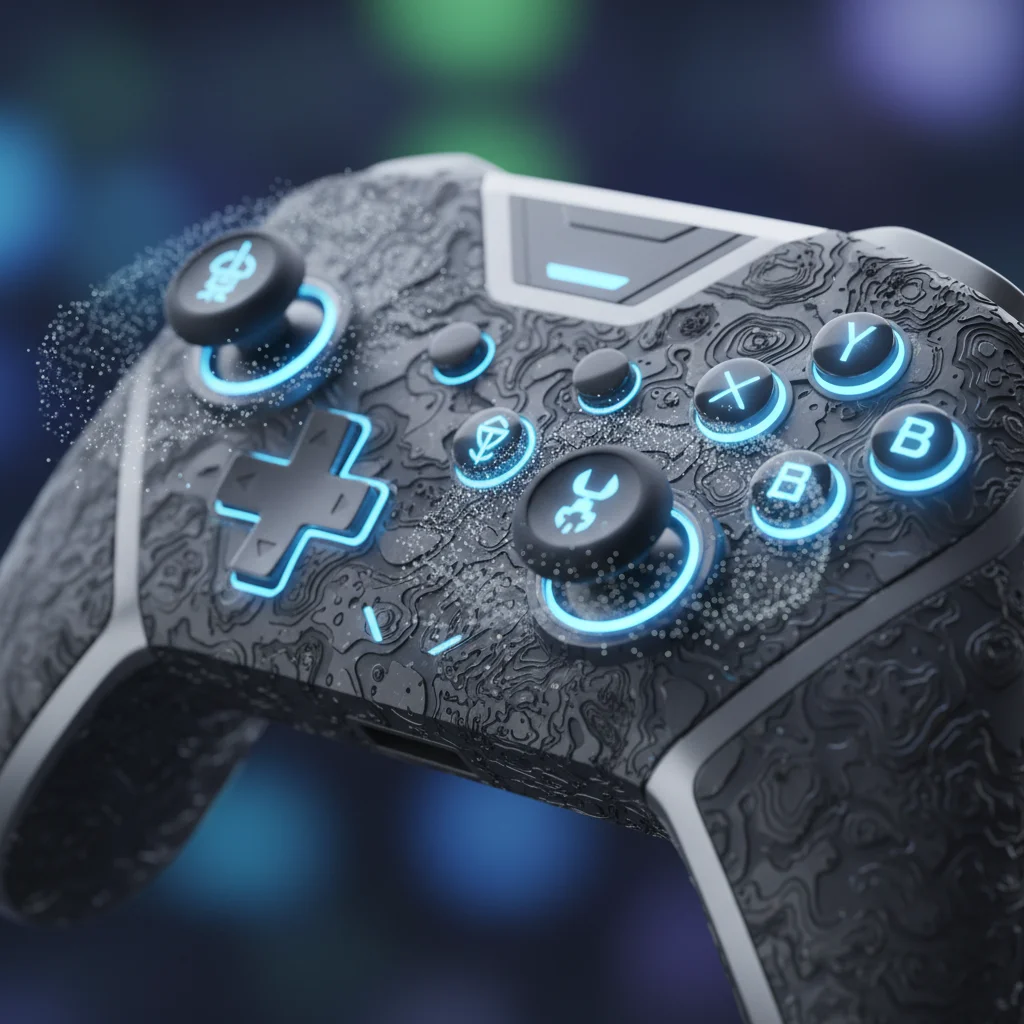
While rumble packs have been a staple of gaming for decades, the concept of haptic feedback is evolving far beyond simple vibrations. The next generation of gaming controllers will incorporate advanced material science to deliver incredibly nuanced and realistic tactile sensations, fundamentally altering how we experience in-game actions. These sophisticated haptic controllers are set to be a major force in the next-gen gaming accessories market.
Beyond Basic Vibration
Current haptic systems in controllers like Sony’s DualSense have already showcased the potential of more sophisticated feedback, allowing players to feel the tension of a bowstring or the varied terrain underfoot. However, the future holds even more intricate sensations. Imagine feeling the distinct texture of different surfaces – the gritty crunch of gravel, the smooth slide of ice, or the coarse grain of wood – directly through your fingertips. This level of detail is achievable through the integration of advanced actuators and smart materials.
The Role of Advanced Material Science
Researchers are experimenting with various technologies to achieve this, including:
- Micro-actuators: Tiny, precise motors capable of generating extremely localized and varied vibrations.
- Electroactive polymers (EAPs): These ‘artificial muscles’ can change shape and stiffness when an electric current is applied, allowing for dynamic changes in the controller’s surface texture or resistance.
- Thermal haptics: The ability to simulate changes in temperature, allowing players to feel the warmth of a fire or the chill of a winter landscape.
- Force feedback arrays: Miniaturized systems that can apply pressure to specific points on the hand, simulating the impact of a blow or the weight of an object.
The combination of these technologies will allow developers to craft a much richer and more immersive sensory experience. Imagine feeling the recoil of a specific weapon with precision, or the subtle shift in weight as you pick up a different item in a game. This tactile fidelity will deepen immersion and provide a new layer of feedback that enhances gameplay and storytelling.
Impact on Gameplay and Sales
These advanced haptic controllers will not only make games more immersive but can also provide crucial gameplay advantages, offering non-visual cues that enhance player awareness and reaction times. As game developers begin to fully leverage these capabilities, the demand for such controllers will skyrocket. The US market, known for its embrace of cutting-edge technology, is expected to be a primary driver of sales for these innovative next-gen gaming accessories, making them a standard for serious gamers by late 2026.
3. Adaptive Trigger and Resistance Systems in Controllers
Building on the advancements in haptic feedback, another significant evolution in controller technology comes in the form of adaptive triggers and resistance systems. While seen in nascent forms today, by late 2026, these features will be far more sophisticated and prevalent, making them a crucial part of the next-gen gaming accessories landscape.
Dynamic Resistance for Unparalleled Realism
The core concept behind adaptive triggers is to dynamically change the resistance and tension of the L2/R2 (or equivalent) triggers based on in-game actions. This goes beyond a simple ‘on’ or ‘off’ resistance. Imagine pulling the trigger of a shotgun and feeling a heavy, satisfying resistance, then switching to a sniper rifle and experiencing a lighter, more precise pull. Or consider the feeling of drawing a bow, where the resistance gradually increases as you pull back the string, reaching a peak before release.
Expanding Beyond Triggers
The technology won’t be limited to just triggers. We can expect to see dynamic resistance applied to other parts of the controller, such as joysticks or even face buttons. For instance, a joystick might offer more resistance when navigating through deep mud in an off-road game, or a button might provide tactile feedback simulating the activation of a heavy switch. This level of physical interaction adds a completely new dimension to gameplay, making actions feel more impactful and realistic.
Technological Underpinnings
Achieving this dynamic resistance involves sophisticated mechanisms, including:
- Voice coil actuators: These can precisely control resistance and movement, offering fine-tuned feedback.
- Electromagnetic brakes: Capable of applying variable resistance to trigger mechanisms.
- Piezoelectric materials: These can generate or react to electrical currents based on mechanical stress, allowing for subtle changes in feel.
The integration of these technologies will allow developers to customize the physical sensation of almost any in-game action, from accelerating a vehicle to casting a spell. This personalization of physical feedback will create a much deeper connection between the player and the game world.
Market Adoption and Growth
As developers continue to integrate these features into their games, the demand for controllers equipped with adaptive triggers and resistance systems will naturally grow. Gamers will seek out these devices for the competitive edge they offer and the unparalleled immersion they provide. The US market is particularly receptive to innovations that enhance gameplay, ensuring that these controllers will be among the top-selling next-gen gaming accessories by late 2026.
4. Dedicated Cloud Gaming Handhelds with Ultra-Low Latency
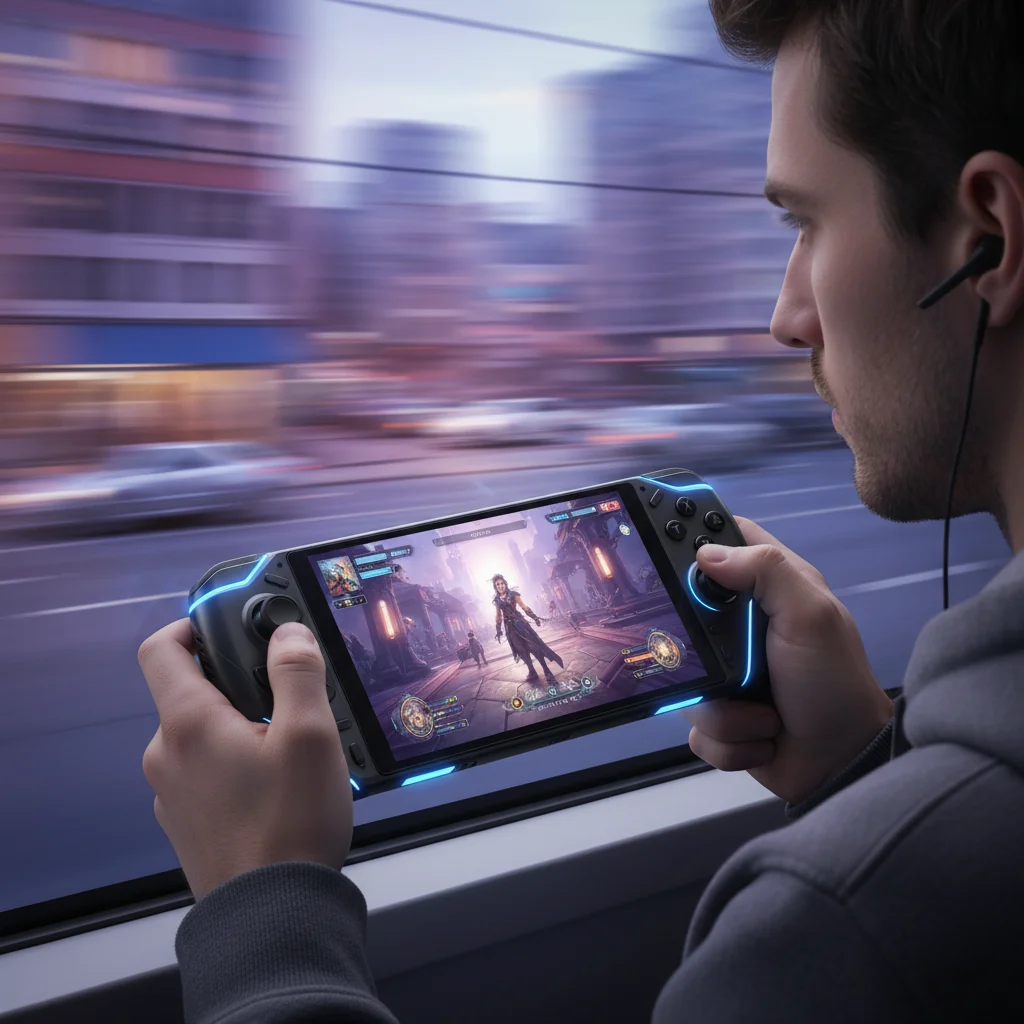
Cloud gaming has been touted as the future of gaming for years, promising access to high-fidelity titles without the need for expensive local hardware. While it has made significant strides, latency and a lack of dedicated, optimized hardware have been hurdles. By late 2026, we anticipate a boom in dedicated cloud gaming handhelds designed specifically for ultra-low latency streaming, positioning them as a dominant force among next-gen gaming accessories.
The Promise of Cloud Gaming, Realized
Imagine playing the latest AAA titles on a sleek, portable device without downloads, updates, or local storage concerns. This is the promise of cloud gaming, and next-gen handhelds are designed to fully realize it. These devices won’t focus on raw local processing power but rather on optimizing the streaming experience, ensuring minimal input lag and crystal-clear visuals.
Key Features for Ultra-Low Latency
The success of these handhelds will hinge on several critical features:
- Dedicated hardware for decoding: Specialized chipsets designed to efficiently decode video streams from cloud servers, reducing processing overhead and latency.
- Advanced Wi-Fi 6E/7 and 5G connectivity: Ensuring stable, high-bandwidth connections with minimal interference, crucial for maintaining a smooth streaming experience.
- Optimized operating systems: Lightweight OS tailored for cloud gaming, minimizing background processes and maximizing network efficiency.
- High-refresh-rate, low-response-time displays: Reducing display latency to ensure what you see on screen is as close as possible to the server’s output.
- Ergonomic design with high-quality controls: Despite being streaming devices, the physical controls must be top-notch to provide a satisfying gaming experience, akin to traditional consoles.
These handhelds will essentially act as highly optimized terminals for services like Xbox Cloud Gaming, GeForce Now, PlayStation Plus, and future platforms. They will bridge the gap between mobile gaming and console gaming, offering a premium experience on the go.
Market Potential and Sales Momentum
The convenience and accessibility offered by these devices will appeal to a broad demographic, from casual gamers who want to play on the go without investing in expensive hardware, to hardcore enthusiasts who want their favorite titles accessible anywhere. As 5G networks become more ubiquitous and cloud gaming services mature, these handhelds will become increasingly attractive. The US market, with its widespread high-speed internet infrastructure and a growing appetite for mobile entertainment, is projected to drive substantial sales for these next-gen gaming accessories, making them a significant category by late 2026.
The Converging Future of Gaming: What it Means for Players and the Industry
The four categories of next-gen gaming accessories we’ve explored – advanced standalone VR headsets, haptic feedback controllers, adaptive trigger systems, and dedicated cloud gaming handhelds – are not isolated innovations. They represent a converging trend towards more immersive, accessible, and personalized gaming experiences. The synergy between these technologies will be where the true magic happens.
Enhanced Immersion Across Platforms
Imagine a VR game where your haptic controllers not only provide nuanced tactile feedback but also feature adaptive triggers that make weapon handling incredibly realistic. Or consider playing a high-fidelity cloud game on a handheld, then seamlessly switching to a VR headset for a fully immersive experience, all while using the same advanced haptic input. This level of integration promises an unprecedented depth of immersion, blurring the lines between the physical and virtual worlds.
Accessibility and Inclusivity
Beyond immersion, these advancements also hold significant promise for accessibility. Eye-tracking in VR, for instance, can open up gaming to individuals with motor impairments. More intuitive and responsive haptic feedback can provide crucial cues for visually impaired players. Cloud gaming handhelds, by removing the barrier of expensive hardware, make high-quality gaming accessible to a wider audience, fostering greater inclusivity within the gaming community.
Economic Impact and Market Dynamics
The projected dominance of these next-gen gaming accessories in US sales by late 2026 signifies a thriving and evolving market. This growth will spur further innovation, attract new talent to the industry, and create new revenue streams for hardware manufacturers, software developers, and service providers alike. Companies that invest early and strategically in these areas are likely to reap significant rewards.
For consumers, this means more choices, richer experiences, and ultimately, more ways to enjoy their passion for gaming. The competition among manufacturers to deliver the most compelling and feature-rich accessories will drive prices down over time, making these cutting-edge technologies more attainable for the average gamer.
Conclusion: The Dawn of a New Gaming Era
The gaming world is on the cusp of a revolutionary period, driven by innovations in hardware that promise to redefine our expectations. By late 2026, the US market will see advanced standalone VR headsets, sophisticated haptic feedback controllers, dynamic adaptive trigger systems, and ultra-low latency cloud gaming handhelds emerge as the dominant next-gen gaming accessories. These devices are not just incremental upgrades; they are foundational shifts that will unlock unprecedented levels of immersion, accessibility, and enjoyment.
For gamers, this future promises more profound connections to virtual worlds, more intuitive interactions, and the freedom to play high-quality titles wherever and whenever they choose. For the industry, it represents a fertile ground for growth, innovation, and the expansion of the gaming community. Keep a close eye on these categories; they are set to shape the future of interactive entertainment for years to come.
Are you ready to embrace the next generation of gaming? The accessories that will define it are already on the horizon, poised to transform your gaming experiences in ways you can only begin to imagine.