Sustainable Tech: How 4 New Eco-Friendly Innovations in Consumer Electronics Are Reducing E-Waste by 20% by Mid-2026
Sustainable Tech: How 4 New Eco-Friendly Innovations in Consumer Electronics Are Reducing E-Waste by 20% by Mid-2026
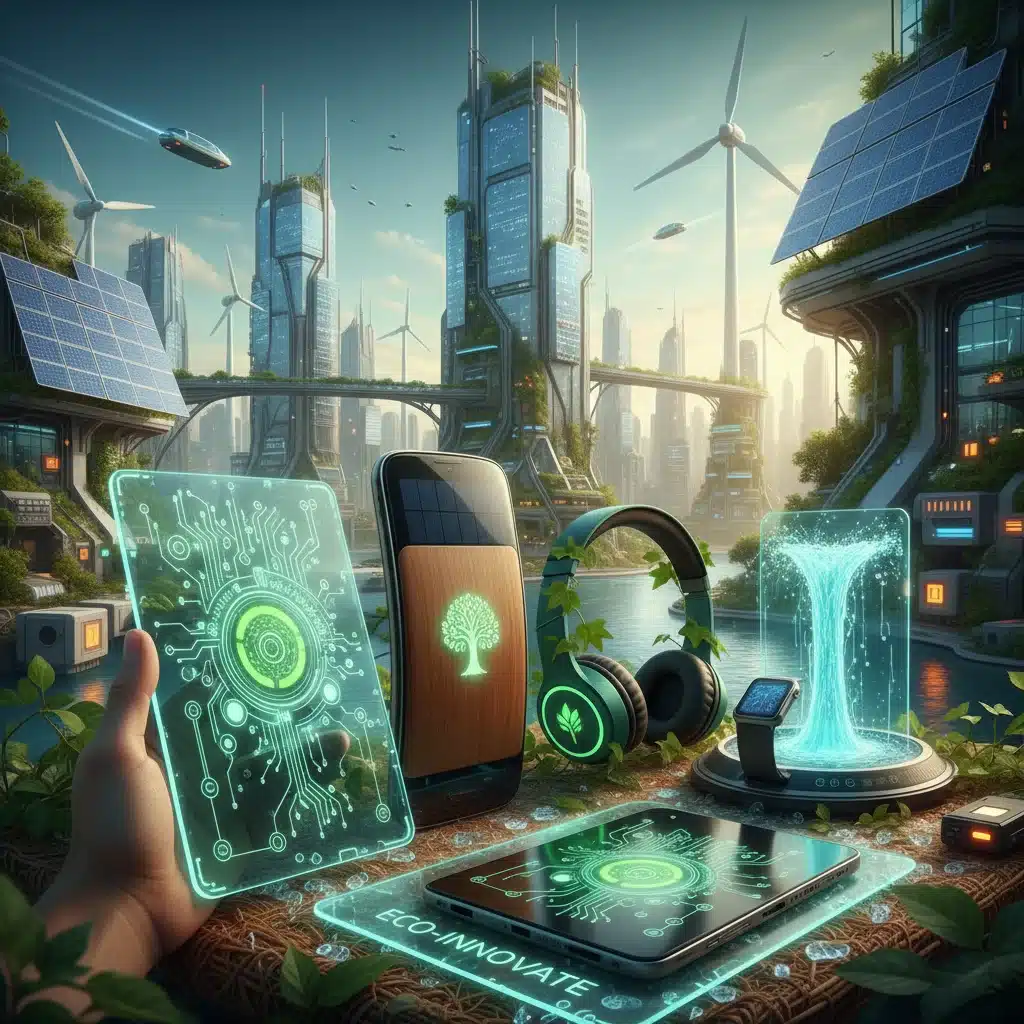
The relentless march of technological progress, while undeniably beneficial, has cast a long shadow in the form of electronic waste, or e-waste. This burgeoning environmental crisis, fueled by rapid product obsolescence and insufficient recycling infrastructure, poses a significant threat to our planet. However, a new wave of eco-friendly tech innovations is emerging, promising to reshape the consumer electronics landscape and dramatically reduce our collective e-waste footprint. Industry experts and environmental advocates are optimistic, projecting a remarkable 20% reduction in e-waste by mid-2026, thanks to these groundbreaking advancements. This article delves into four pivotal innovations that are leading the charge towards a more sustainable and circular economy in consumer electronics.
The sheer volume of e-waste generated globally is staggering. According to the United Nations, a record 53.6 million metric tons of e-waste was generated worldwide in 2019, and only 17.4% of this was formally documented as collected and recycled. This waste often contains hazardous materials like lead, mercury, and cadmium, which can leach into soil and water, posing severe health risks and environmental damage. The challenge is clear: we need to move beyond mere recycling and embrace a holistic approach that integrates sustainability into every stage of a product’s lifecycle, from design and manufacturing to usage and end-of-life. This is precisely where the new generation of eco-friendly tech innovations comes into play.
The shift towards sustainable consumer electronics is not merely a trend; it’s a necessity. Consumers are increasingly demanding environmentally responsible products, and companies are responding by embedding sustainability into their core business strategies. This article will explore how modular design, bio-based and recycled materials, advanced energy efficiency, and extended product lifecycles are converging to create a powerful force for change. We will examine the specific impacts of these innovations, the challenges they face, and the exciting potential they hold for a future where technology and environmental stewardship go hand-in-hand. Understanding these shifts is crucial for anyone interested in the future of technology and the health of our planet.
1. Modular Design and Enhanced Repairability: The End of Planned Obsolescence
One of the most significant drivers of e-waste has historically been planned obsolescence – the intentional design of products to have a limited lifespan, encouraging consumers to purchase new models frequently. However, a powerful counter-movement is gaining traction: modular design and enhanced repairability. This eco-friendly tech innovation fundamentally changes the relationship between consumer and product, extending the lifespan of devices and drastically reducing the need for premature replacements.
Modular design involves creating electronic devices where components can be easily replaced, upgraded, or repaired. Imagine a smartphone where the camera, battery, or even the processor can be swapped out with minimal tools and technical expertise. This concept directly challenges the ‘throwaway’ culture that has dominated consumer electronics for decades. Companies like Fairphone have been pioneers in this space, demonstrating the viability and demand for such products. Their smartphones are designed with repairability at their core, offering spare parts and detailed repair guides, empowering users to maintain their devices for longer.
The benefits of modularity are manifold. Firstly, it drastically reduces e-waste by allowing users to replace only the faulty or outdated part, rather than the entire device. This means fewer discarded phones, laptops, and other gadgets ending up in landfills. Secondly, it fosters a circular economy by keeping valuable resources in use for longer. Thirdly, it empowers consumers, giving them greater control over their purchases and potentially saving them money in the long run. The right to repair movement, gaining momentum globally, further supports this innovation, advocating for legislation that makes it easier and more affordable for consumers to repair their electronics.
Beyond smartphones, modularity is being explored in various other consumer electronics, from laptops with upgradable RAM and storage to home appliances with replaceable components. This approach also encourages manufacturers to produce higher-quality, more durable parts, as they are designed to be individually serviced and not merely integrated into a disposable whole. The impact of this shift is profound; by enabling devices to evolve with user needs and technological advancements, modular design directly combats the relentless cycle of consumption and waste, making it a cornerstone of sustainable electronics. As more companies adopt this philosophy, the reduction in e-waste will become increasingly evident, contributing significantly to the projected 20% decline by mid-2026. This focus on longevity and user empowerment is a critical step towards a truly sustainable future for technology.

2. The Rise of Bio-based and Recycled Materials: A Greener Supply Chain
The materials used in consumer electronics are a major concern, both during extraction and at the end of a product’s life. Traditional electronics rely heavily on virgin plastics, rare earth metals, and other finite resources, often extracted through environmentally damaging processes. The second crucial eco-friendly tech innovation addresses this by focusing on the integration of bio-based and recycled materials into the manufacturing process, transforming the supply chain into a more sustainable and ethical one.
Bio-based Materials: From Corn to Circuits
Bio-based materials, derived from renewable biomass sources such as corn starch, sugarcane, or cellulose, offer a compelling alternative to traditional petroleum-based plastics. These materials can be biodegradable or compostable, significantly reducing the environmental impact at the end of a product’s life. For instance, some manufacturers are experimenting with bioplastics for device casings, packaging, and even internal components. This not only reduces reliance on fossil fuels but also lessens the burden on landfills. Companies are investing heavily in research and development to create bio-based alternatives that meet the stringent performance requirements of modern electronics, including durability, heat resistance, and electrical insulation.
The adoption of bio-based materials is still in its nascent stages for many complex electronic components, but progress is rapid. We are seeing these materials increasingly used in accessories like phone cases, charging cables, and even in some internal structural elements of devices. The challenge lies in scaling production and ensuring that these materials are truly sustainable throughout their entire lifecycle, from cultivation to disposal, without competing with food sources or contributing to deforestation.
Recycled Materials: Closing the Loop
Equally, if not more, impactful is the increased use of recycled materials. This involves taking post-consumer waste – particularly e-waste itself – and processing it to extract valuable metals, plastics, and other components that can be reintegrated into new products. This closed-loop approach is a cornerstone of the circular economy and a powerful eco-friendly tech innovation.
Many major tech companies are now committing to using a higher percentage of recycled content in their new devices. For example, some laptop manufacturers are incorporating recycled aluminum in their chassis and recycled plastics in internal components. The benefits are substantial: it reduces the need for new raw material extraction, which is often energy-intensive and environmentally destructive; it diverts waste from landfills; and it lowers the carbon footprint associated with manufacturing. The technology for extracting and refining these recycled materials is constantly improving, making it more economically viable and environmentally efficient.
The challenge here lies in the efficiency and scalability of recycling infrastructure. A significant portion of e-waste is still not properly collected or processed, meaning valuable resources are lost. However, investments in advanced recycling technologies, such as urban mining and sophisticated material separation techniques, are making it possible to recover a wider range of materials with greater purity. As these processes become more widespread and efficient, the reliance on virgin materials will continue to decrease, marking a substantial step towards the 20% e-waste reduction goal. The integration of both bio-based and recycled materials represents a dual-pronged approach to creating a truly greener supply chain for consumer electronics.
3. Advanced Energy Efficiency and Renewable Power Integration: Powering Green
Beyond the physical materials and design of electronics, the energy consumption during their use phase also contributes significantly to their environmental footprint. The third critical eco-friendly tech innovation focuses on dramatically improving energy efficiency and integrating renewable power sources, thereby reducing the carbon emissions associated with powering our devices and lessening the strain on energy grids.
Ultra-Low Power Components and Software Optimization
Manufacturers are continuously innovating to create components that consume less power while maintaining or even enhancing performance. This includes more efficient processors, displays, and memory modules. Advances in semiconductor technology allow for greater computational power with less energy expenditure. Furthermore, software optimization plays a crucial role. Operating systems and applications are being designed to manage power more intelligently, putting components into low-power states when not actively in use and optimizing background processes.
Consider the evolution of smartphone batteries. While battery capacity has increased, so has the efficiency of the internal components and software, leading to longer battery life without necessarily a proportionate increase in battery size. This reduces the frequency of charging, thereby lowering overall energy consumption. Similarly, laptops, smart home devices, and even large appliances are being engineered for peak energy efficiency, often exceeding previous industry standards. These improvements, collectively, lead to a substantial reduction in the energy demand of our electronic ecosystems.
Integrated Renewable Energy Solutions
A more ambitious, yet increasingly viable, aspect of this innovation is the direct integration of renewable energy sources into consumer electronics. While not yet widespread for primary power, we are seeing devices incorporating small solar panels for supplementary charging, particularly in outdoor gadgets, smartwatches, and even some e-readers. This reduces reliance on grid electricity and contributes to a device’s energy independence.
Beyond individual devices, the broader ecosystem is seeing a shift towards powering data centers and manufacturing facilities with renewable energy. Major tech companies are making significant commitments to operate entirely on renewable energy, sourcing wind, solar, and hydro power for their operations. This systemic change, while not directly part of the consumer product itself, has a profound impact on the overall environmental footprint of the electronics industry. By ensuring that the production and maintenance of our digital world are powered by clean energy, we address a massive source of indirect emissions.
The combination of ultra-low power components, intelligent software, and the growing integration of renewable energy sources is a powerful force for sustainability. It not only reduces the operational carbon footprint of electronics but also contributes to a cleaner energy grid overall. This multifaceted approach to energy efficiency is a key pillar in the quest for a 20% reduction in e-waste, as it makes the entire lifecycle of electronics more environmentally benign, from production to daily use. The emphasis on smart energy management and renewable integration underscores a holistic commitment to green technology.
4. Extended Product Lifecycles and Service-Oriented Models: Longevity as a Feature
The final, yet equally transformative, eco-friendly tech innovation is the shift towards extended product lifecycles and the adoption of service-oriented models. This moves away from the traditional model of selling a product as a one-off transaction and instead focuses on providing ongoing value, maintenance, and support, thereby maximizing the usable life of electronic devices.
Software Updates and Long-Term Support
A significant factor in perceived obsolescence is the cessation of software updates and security patches, which can render older devices vulnerable or incompatible with newer applications. Manufacturers are increasingly committing to longer-term software support for their devices. This means that even older models continue to receive essential updates, ensuring their functionality, security, and compatibility for many years. This commitment directly combats the notion that a device is ‘old’ simply because a newer model has been released.
Furthermore, companies are providing better access to replacement parts and repair services, either directly or through authorized third parties. This ties back to the repairability aspect mentioned earlier but emphasizes the ongoing commitment to keeping devices operational. The availability of genuine parts and reliable repair information is crucial for consumers to confidently extend the life of their electronics.
Product-as-a-Service (PaaS) Models
Perhaps the most radical shift is the emergence of Product-as-a-Service (PaaS) models. Instead of owning a device outright, consumers might lease or subscribe to its use, with the manufacturer retaining ownership and responsibility for maintenance, upgrades, and eventual recycling. This model incentivizes manufacturers to design highly durable, repairable, and upgradable products, as they bear the cost of failures and replacements. For instance, some companies are exploring PaaS for business laptops or even consumer appliances, where the focus shifts from selling a physical item to providing a continuous service.
Under a PaaS model, when a device reaches the end of its useful life for one user, it can be refurbished, upgraded, and redeployed for another, or its components can be efficiently harvested for recycling and reuse. This maximizes resource utilization and minimizes waste. It also aligns the manufacturer’s financial incentives with sustainability goals: the longer a device lasts, the more profitable it is for the provider. This model fosters a true circular economy where resources are kept in use for as long as possible, and waste is minimized.
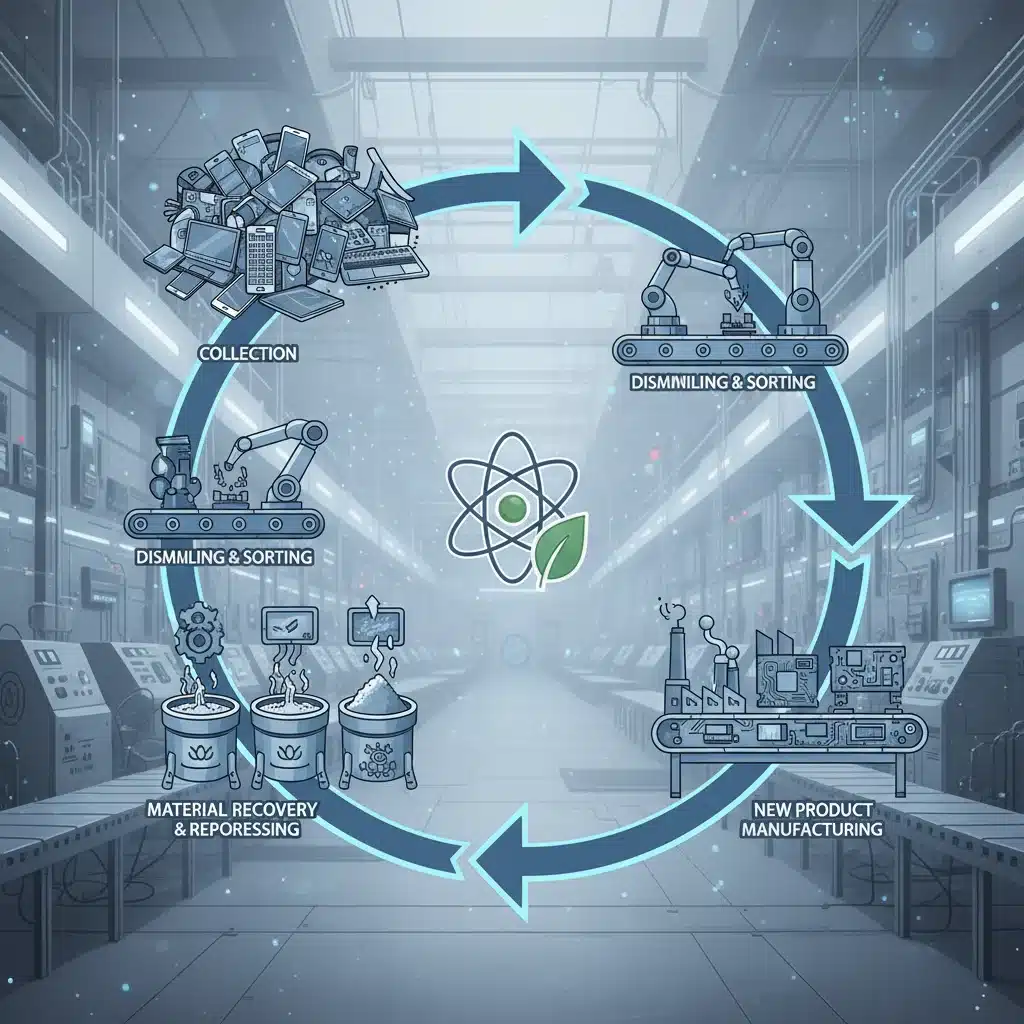
The combination of extended software support, improved repair access, and the innovative PaaS model represents a powerful shift in how we consume and interact with electronics. By prioritizing longevity and service over rapid replacement, these initiatives are set to significantly reduce the volume of e-waste generated, pushing us closer to the ambitious 20% reduction target by mid-2026. This paradigm shift makes longevity a key feature, not an afterthought.
Challenges and the Road Ahead for Eco-Friendly Tech Innovations
While the momentum behind these eco-friendly tech innovations is strong, the path to a 20% reduction in e-waste by mid-2026 is not without its challenges. Widespread adoption requires overcoming several hurdles, including consumer behavior, economic considerations, and regulatory frameworks.
One major challenge is consumer perception and demand. Many consumers are accustomed to frequent upgrades, often driven by marketing that emphasizes new features and aesthetics. Shifting this mindset towards valuing durability, repairability, and sustainability requires concerted effort from manufacturers, retailers, and advocacy groups. Education campaigns can play a vital role in informing consumers about the environmental and economic benefits of extending device lifecycles and choosing sustainable products.
Economic viability is another significant factor. Implementing modular designs, using recycled materials, and offering long-term support can sometimes increase initial production costs. Manufacturers need to find ways to absorb or offset these costs, perhaps through economies of scale, government incentives, or by communicating the long-term value proposition to consumers. The ‘green premium’ needs to be minimized or justified by clear benefits. Furthermore, developing robust recycling infrastructure for complex electronics remains a costly and logistically challenging endeavor, particularly in developing regions.
Regulatory frameworks also play a crucial role. Governments worldwide are beginning to enact ‘right to repair’ laws and setting targets for recycled content in products. These regulations can accelerate the adoption of eco-friendly tech innovations by creating a level playing field and incentivizing sustainable practices. However, inconsistencies in regulations across different regions can complicate global supply chains for multinational corporations. Harmonizing these policies will be essential for maximizing impact.
Technological limitations, though rapidly diminishing, still exist. For instance, achieving the same performance and aesthetic qualities with bio-based or recycled plastics as with virgin materials can sometimes be challenging. Similarly, the energy efficiency of certain high-performance components might be difficult to improve further without compromising functionality. Continuous research and development are vital to push these boundaries.
Despite these challenges, the trajectory is clear. The collaborative efforts of innovators, industry leaders, policymakers, and consumers are creating a powerful ecosystem for change. The increasing awareness of environmental issues, coupled with technological breakthroughs, suggests that the 20% e-waste reduction target is not just aspirational but achievable. The long-term benefits – a healthier planet, more responsible resource management, and a more resilient tech industry – far outweigh the short-term obstacles. The future of consumer electronics is undoubtedly green, and these innovations are paving the way.
Conclusion: A Greener Horizon for Consumer Electronics
The landscape of consumer electronics is undergoing a profound transformation, driven by a pressing need to address the global e-waste crisis. The four eco-friendly tech innovations discussed – modular design and enhanced repairability, the rise of bio-based and recycled materials, advanced energy efficiency and renewable power integration, and extended product lifecycles with service-oriented models – are not merely incremental improvements; they represent a fundamental paradigm shift.
These innovations are converging to create a more sustainable, circular, and responsible tech industry. By designing products for longevity and repair, utilizing sustainable materials, reducing energy consumption, and embracing service-based models, we are actively dismantling the ‘take-make-dispose’ linear economy that has long dominated the sector. The projected 20% reduction in e-waste by mid-2026 is an ambitious yet attainable goal, reflecting the significant impact these changes are poised to have.
The transition will require continued innovation, sustained investment, supportive policy frameworks, and a shift in consumer expectations. However, the benefits are immense: a reduction in hazardous waste, conservation of finite resources, lower carbon emissions, and a more resilient and ethical supply chain. As technology continues to evolve, it is imperative that sustainability remains at its core, ensuring that progress benefits both humanity and the planet. The future of consumer electronics is not just about faster processors or sharper displays; it’s about smarter, greener choices that secure a healthier future for all.