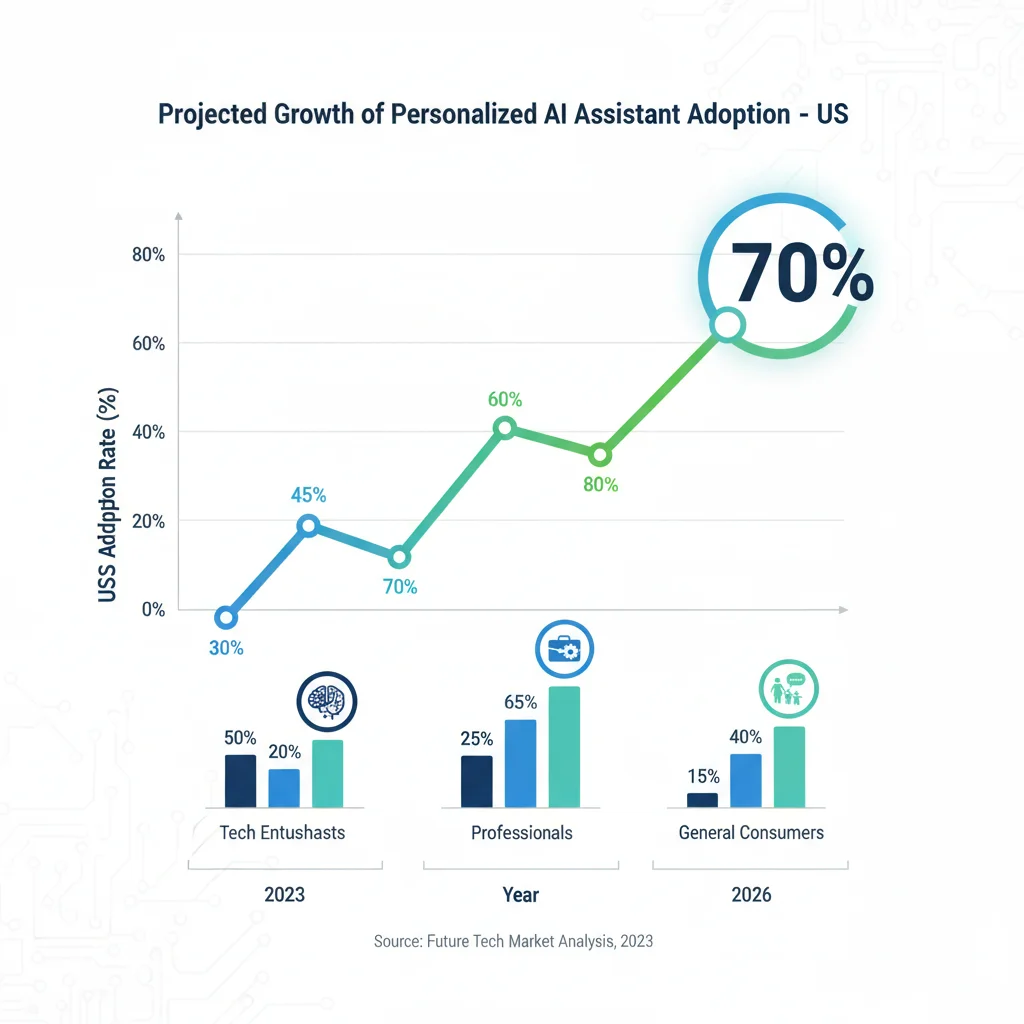
The Rise of Personalized AI Assistants: 70% US User Interaction by 2026
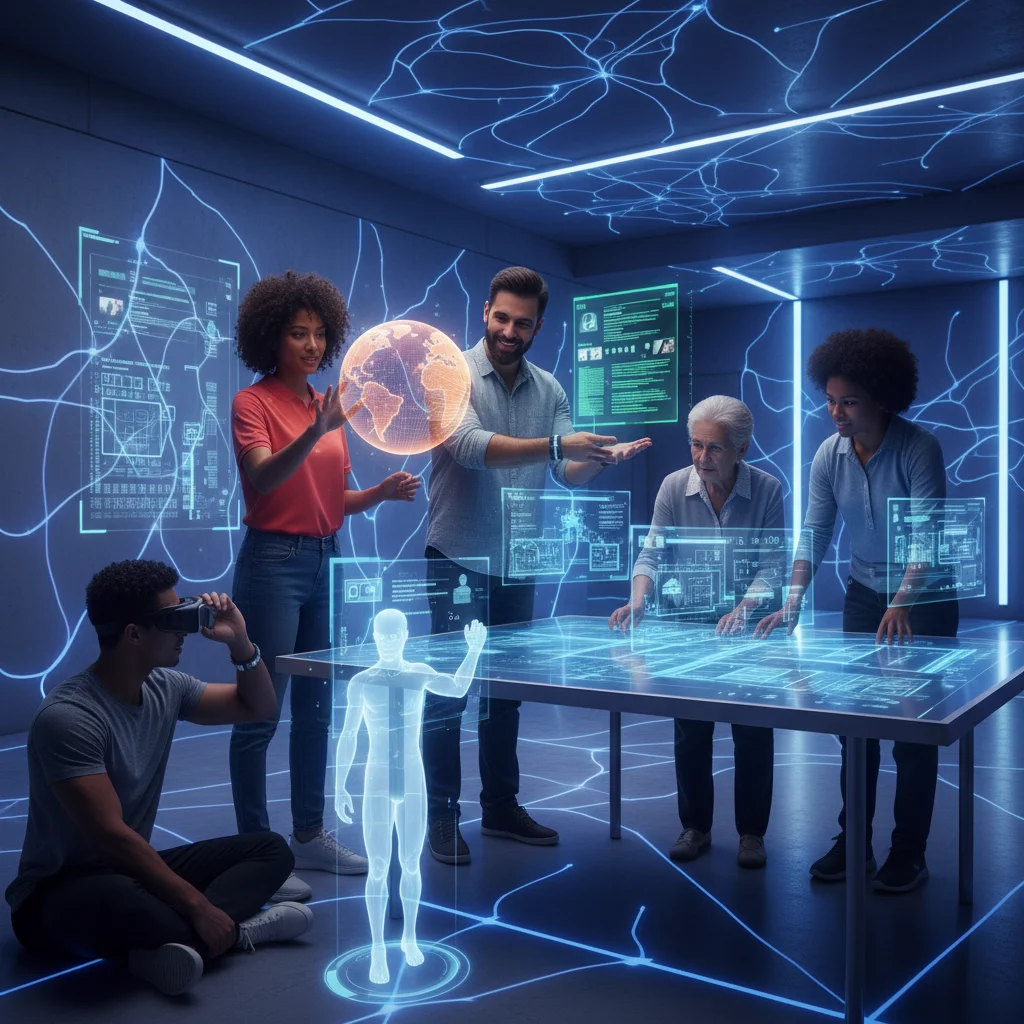
In an era defined by relentless technological advancement, one trend stands out with particular significance: the meteoric rise of Personalized AI Assistants. These intelligent virtual companions are no longer confined to the realm of science fiction; they are rapidly becoming an indispensable part of our daily lives. Recent projections indicate a monumental shift in how individuals interact with technology, with an astonishing 70% of US users expected to engage with personalized AI assistants by late 2026. This isn’t merely an incremental change; it represents a fundamental reshaping of the human-computer interface, promising a future where technology is not just smart, but deeply intuitive and uniquely tailored to each individual.
The concept of a personal assistant has evolved dramatically. From human secretaries to simple voice commands, we are now on the cusp of an era where AI-driven entities anticipate our needs, learn our preferences, and proactively assist us in ways previously unimaginable. This comprehensive exploration delves into the driving forces behind this phenomenon, the profound implications for individuals and industries, and what the future holds as Personalized AI Assistants become an integral part of the technological fabric.
The Dawn of Hyper-Personalization: What Are Personalized AI Assistants?
At its core, a Personalized AI Assistant is an artificial intelligence system designed to understand, learn from, and adapt to an individual user’s unique behaviors, preferences, and needs. Unlike generic AI tools that offer broad functionalities, personalized assistants leverage advanced machine learning algorithms, natural language processing (NLP), and vast datasets to create a truly bespoke experience. They go beyond simple task execution, aiming to anticipate user requirements and offer proactive solutions.
Key Characteristics of Personalized AI Assistants:
- Adaptive Learning: These assistants continuously learn from user interactions, refining their understanding of individual preferences over time. This includes learning about routines, communication styles, interests, and even emotional states.
- Contextual Understanding: They can interpret the context of a request or situation, considering factors like location, time of day, past conversations, and current activities to provide more relevant assistance.
- Proactive Assistance: Rather than waiting for explicit commands, personalized AI assistants can anticipate needs and offer suggestions, reminders, or information before being asked. For example, suggesting the best route to work based on real-time traffic or reminding you of an upcoming appointment.
- Multi-Modal Interaction: Users can interact with these assistants through various modalities, including voice, text, gestures, and even biometric inputs, making the interaction fluid and natural.
- Integration Across Platforms: They seamlessly integrate across multiple devices and platforms, from smartphones and smart home devices to wearables and vehicles, ensuring a consistent and personalized experience wherever the user goes.
The distinction between a standard AI assistant and a personalized one lies in the depth of understanding and the degree of adaptation. While Siri or Alexa can answer questions and set timers, a truly personalized AI assistant might proactively suggest a new recipe based on your dietary preferences, recent grocery purchases, and what you’ve cooked previously, or automatically adjust your home’s climate based on your typical arrival time and preferred temperature. This level of intimacy and predictive capability is what drives the projected surge in user adoption, making Personalized AI Assistants a game-changer.
The Driving Forces Behind 70% US User Interaction by 2026
Several converging factors are propelling the rapid adoption of Personalized AI Assistants, leading to the staggering prediction of 70% US user interaction by late 2026.
1. Technological Advancements and Accessibility:
The exponential growth in computational power, coupled with advancements in machine learning (especially deep learning) and natural language processing, has made highly sophisticated AI more accessible and affordable. Cloud-based AI services have democratized access to powerful algorithms, allowing developers to integrate advanced personalization features into a wide array of applications and devices. Furthermore, the proliferation of smart devices – from smartphones to smart speakers and wearables – provides the ubiquitous hardware necessary for these assistants to operate seamlessly in our lives.
2. The Demand for Convenience and Efficiency:
In our fast-paced world, individuals are constantly seeking ways to optimize their time and reduce cognitive load. Personalized AI Assistants offer unparalleled convenience by automating routine tasks, managing schedules, providing instant information, and streamlining complex processes. Imagine an assistant that handles your email triage, manages your smart home, optimizes your commute, and even helps you plan your meals – all tailored to your specific habits and preferences. This promise of a more efficient and less stressful life is a powerful motivator for adoption.
3. Enhanced User Experience and Engagement:
As AI becomes more sophisticated, the user experience becomes more intuitive and engaging. Personalized interactions feel more natural and less like interacting with a machine. The ability of AI to understand nuances, remember past conversations, and even adapt its tone or communication style creates a more human-like and satisfying interaction. This leads to increased user loyalty and a greater willingness to rely on these assistants for a wider range of tasks.
4. Industry Investment and Innovation:
Major tech giants and countless startups are pouring massive investments into AI research and development, particularly in the realm of personalization. Companies like Google, Apple, Amazon, and Microsoft are locked in a race to develop the most intelligent and comprehensive Personalized AI Assistants, driving rapid innovation. This competitive landscape ensures that new features, improved accuracy, and broader functionalities are constantly being introduced, making these assistants increasingly indispensable.
5. Data Abundance and Analytics:
The sheer volume of data generated daily by users – through their online activities, smart devices, and digital interactions – provides the fuel for personalized AI. Advanced analytics can process this data to create incredibly detailed user profiles, enabling AI assistants to offer highly relevant and timely assistance. This data-driven approach is fundamental to achieving true personalization.
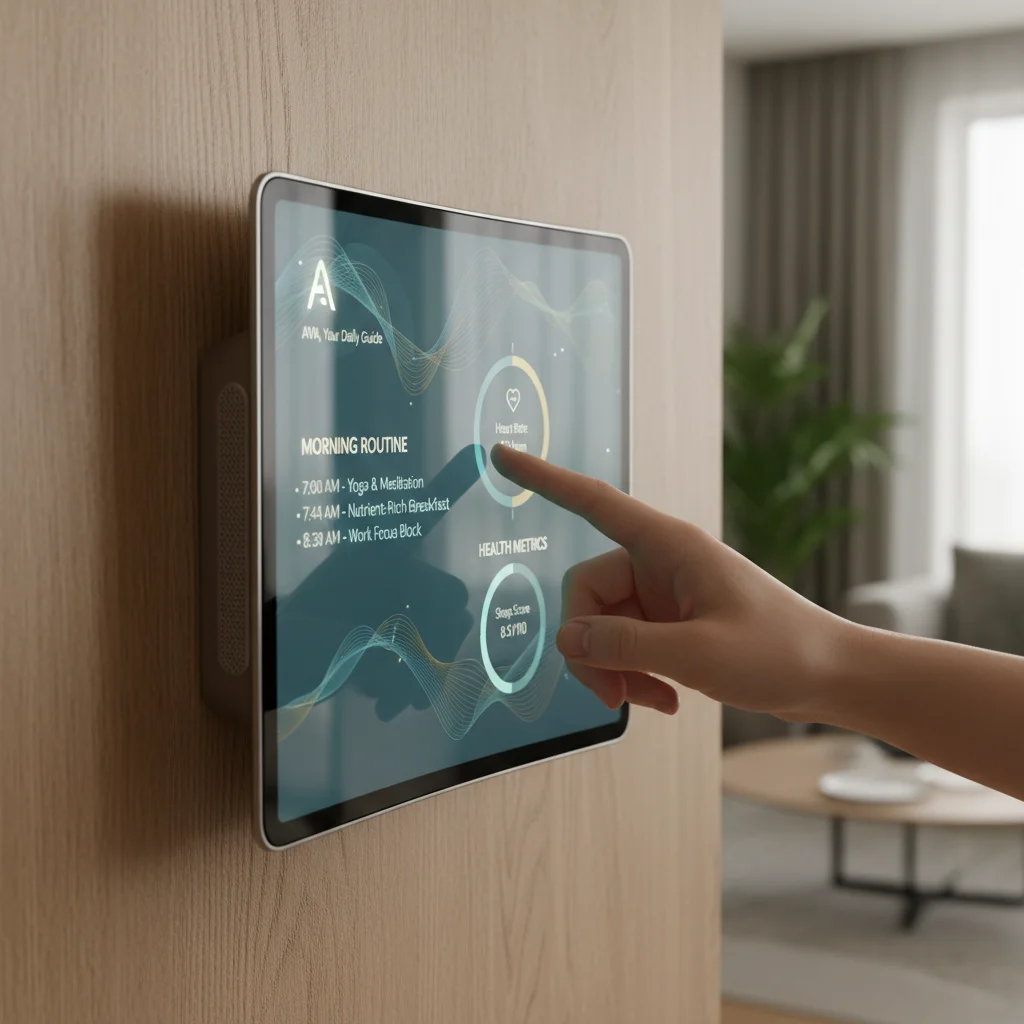
Applications Across Industries: Where Personalized AI Assistants Shine
The impact of Personalized AI Assistants is not limited to individual consumers; it extends across a multitude of industries, revolutionizing operations and customer experiences.
Healthcare:
In healthcare, personalized AI assistants can transform patient care. They can monitor vital signs, remind patients to take medication, provide personalized health advice based on medical history, and even assist with mental health support through tailored conversational interfaces. Imagine an AI assistant that helps manage chronic conditions by tracking symptoms, suggesting lifestyle adjustments, and facilitating communication with healthcare providers, all while maintaining strict privacy protocols.
Education:
For students, personalized AI assistants can act as intelligent tutors, adapting teaching methods and content to individual learning styles and paces. They can provide instant feedback, recommend resources, and help students manage their study schedules, making education more accessible and effective. This bespoke learning experience can significantly improve outcomes and engagement.
Retail and E-commerce:
The retail sector is already seeing the effects of personalized AI. Assistants can offer highly tailored product recommendations, guide customers through complex purchasing decisions, and provide real-time support. By understanding past purchases, browsing history, and stated preferences, these assistants can create a shopping experience that feels uniquely curated for each customer, driving sales and loyalty.
Finance:
In personal finance, AI assistants can help users manage budgets, track spending, identify savings opportunities, and even offer personalized investment advice. They can alert users to unusual transactions, help set financial goals, and provide insights into financial health, empowering individuals to make more informed decisions about their money.
Customer Service:
Personalized AI assistants are redefining customer service by providing instant, relevant, and empathetic support. They can handle routine inquiries, troubleshoot problems, and escalate complex issues to human agents with all necessary context, significantly reducing response times and improving customer satisfaction. The ability to understand customer sentiment and previous interactions makes the support experience far more effective.
Challenges and Ethical Considerations
While the promise of Personalized AI Assistants is immense, their widespread adoption also brings forth significant challenges and ethical considerations that must be addressed.
Privacy and Data Security:
The very nature of personalization relies on collecting and analyzing vast amounts of personal data. This raises serious concerns about privacy. How is this data stored? Who has access to it? How is it protected from breaches? Ensuring robust data encryption, transparent data usage policies, and giving users granular control over their data are paramount to building trust and fostering widespread adoption.
Bias in AI:
AI systems are only as unbiased as the data they are trained on. If training data contains inherent biases (e.g., related to gender, race, socioeconomic status), the personalized AI assistant may perpetuate or even amplify these biases, leading to unfair or discriminatory outcomes. Developers must prioritize diverse datasets and implement rigorous testing to mitigate bias.
Algorithmic Transparency and Explainability:
As AI assistants become more sophisticated, their decision-making processes can become opaque, making it difficult for users to understand why a particular recommendation or action was taken. Ensuring algorithmic transparency and explainability is crucial for accountability and user trust, especially in sensitive areas like healthcare or finance.
Over-Reliance and Skill Degradation:
There is a potential risk of over-reliance on Personalized AI Assistants, which could lead to a degradation of certain human skills, such as critical thinking, problem-solving, or even basic navigation. Striking a balance between assistance and fostering independent thought will be an ongoing challenge.
Job Displacement:
As AI assistants automate more tasks, particularly in customer service, administrative roles, and data analysis, there is a legitimate concern about job displacement. Societies will need to adapt through education, retraining programs, and potentially new economic models to address these changes.
Ethical Dilemmas and Control:
As AI becomes more autonomous and integrated into our lives, ethical dilemmas will inevitably arise. Who is responsible when an AI makes a harmful decision? How much control should users have over their AI assistants, and how much autonomy should the AI be granted? These are complex questions that require careful consideration and robust regulatory frameworks.
The Future Landscape: Beyond 2026
The 70% US user interaction with Personalized AI Assistants by late 2026 is merely a stepping stone towards an even more integrated and AI-driven future. What can we expect beyond this milestone?
Ambient Intelligence:
The concept of ambient intelligence will become a reality, where AI assistants are seamlessly integrated into our environments, anticipating our needs without explicit commands. Homes, workplaces, and public spaces will be imbued with AI that adapts to individual preferences, making interactions with technology virtually invisible.
Emotional Intelligence and Empathy:
Future Personalized AI Assistants will likely develop more sophisticated emotional intelligence, capable of accurately discerning human emotions and responding with greater empathy. This will enable more nuanced and supportive interactions, particularly in areas like mental health support and personal coaching.
Hyper-Autonomous Agents:
We may see the emergence of hyper-autonomous AI agents that can manage complex projects, negotiate on our behalf, and even make significant decisions within predefined parameters. These agents will act as extensions of our will, handling intricate tasks that currently require significant human oversight.
Digital Twins and AI Companions:
The development of "digital twins" – AI models that mirror our digital selves – could become commonplace, allowing AI assistants to represent us in virtual spaces or manage aspects of our digital lives with greater autonomy. These could evolve into true AI companions, offering intellectual stimulation and emotional support.
New Regulatory Frameworks:
As AI becomes more pervasive, governments and international bodies will need to establish comprehensive regulatory frameworks to govern its development and deployment. These frameworks will address issues of ethics, accountability, data governance, and the societal impact of advanced AI.
Strategies for Businesses and Individuals
To thrive in a world increasingly shaped by Personalized AI Assistants, both businesses and individuals must adapt their strategies.
For Businesses:
- Invest in AI Infrastructure: Companies must build robust AI capabilities, focusing on data collection, processing, and machine learning models that enable deep personalization.
- Prioritize Ethical AI Development: Ethical considerations, including privacy, bias, and transparency, should be at the forefront of AI development to build trust and ensure responsible innovation.
- Integrate Across Channels: Businesses should aim for seamless integration of AI assistants across all customer touchpoints, ensuring a consistent and personalized experience.
- Focus on Value-Added Services: Instead of merely automating existing tasks, businesses should leverage AI to create entirely new, personalized services and experiences that were previously impossible.
- Upskill Workforce: Prepare the workforce for collaboration with AI by providing training in AI literacy, data analysis, and roles that involve managing and optimizing AI systems.
For Individuals:
- Embrace AI Literacy: Understand how Personalized AI Assistants work, their capabilities, and their limitations. This knowledge is crucial for navigating the future tech landscape.
- Manage Data Consciously: Be mindful of the data you share and understand privacy settings. Actively manage your digital footprint to protect your personal information.
- Develop Future-Proof Skills: Focus on developing uniquely human skills such as creativity, critical thinking, emotional intelligence, and complex problem-solving, which are less susceptible to AI automation.
- Experiment and Adapt: Be open to experimenting with new AI tools and adapting to new ways of interacting with technology. The ability to learn and adapt will be a key differentiator.
Conclusion
The projection that 70% of US users will interact with Personalized AI Assistants by late 2026 is a powerful indicator of a technological revolution already in full swing. These intelligent systems are poised to redefine convenience, efficiency, and the very nature of our relationship with technology. While the journey ahead presents its share of challenges, particularly concerning privacy and ethics, the transformative potential of hyper-personalized AI is undeniable.
As we move forward, the focus must remain on developing AI responsibly, ensuring that these powerful tools serve humanity’s best interests. The future is not just about smarter machines, but about creating a more intuitive, efficient, and ultimately, more human-centric technological ecosystem. The era of the truly personalized digital companion is upon us, and its impact will resonate for generations to come, fundamentally altering how we live, work, and interact with the world around us.