Edge Computing Explained: Why 60% of US Data Processing Will Shift Closer to Devices by 2026

Edge Computing Explained: Why 60% of US Data Processing Will Shift Closer to Devices by 2026
The digital landscape is undergoing a profound transformation, driven by an insatiable demand for faster insights, more responsive applications, and heightened security. At the heart of this evolution lies edge computing, a paradigm shift that is redefining how and where data is processed. Industry analysts predict a seismic change: an astonishing 60% of US data processing will shift closer to devices by 2026. This isn’t just a technical tweak; it’s a fundamental re-architecture of our digital world, promising to unlock unprecedented levels of efficiency, innovation, and real-time capability. Understanding this trend, the Edge Computing Future, is crucial for businesses, developers, and consumers alike.
The Genesis of Edge Computing: Why Now?
For decades, the cloud has been the undisputed king of data processing. Centralized data centers, with their immense computational power and storage capabilities, have served as the backbone of the internet and enterprise IT. However, as the number of connected devices exploded – from smartphones and smart home gadgets to industrial sensors and autonomous vehicles – new challenges emerged. The sheer volume of data generated at the ‘edge’ of the network, coupled with the need for immediate responses, began to strain the traditional cloud model.
Imagine an autonomous car needing to make a split-second decision based on sensor data. Sending that data to a distant cloud server for processing and then awaiting a response introduces latency that could be catastrophic. Similarly, a smart factory monitoring hundreds of machines for predictive maintenance can’t afford delays in identifying critical anomalies. These scenarios highlight the limitations of a purely centralized approach and underscore the urgent need for a more distributed processing model. This is where the Edge Computing Future steps in, offering a compelling solution to these modern data dilemmas.
Defining the Edge: What Exactly Is It?
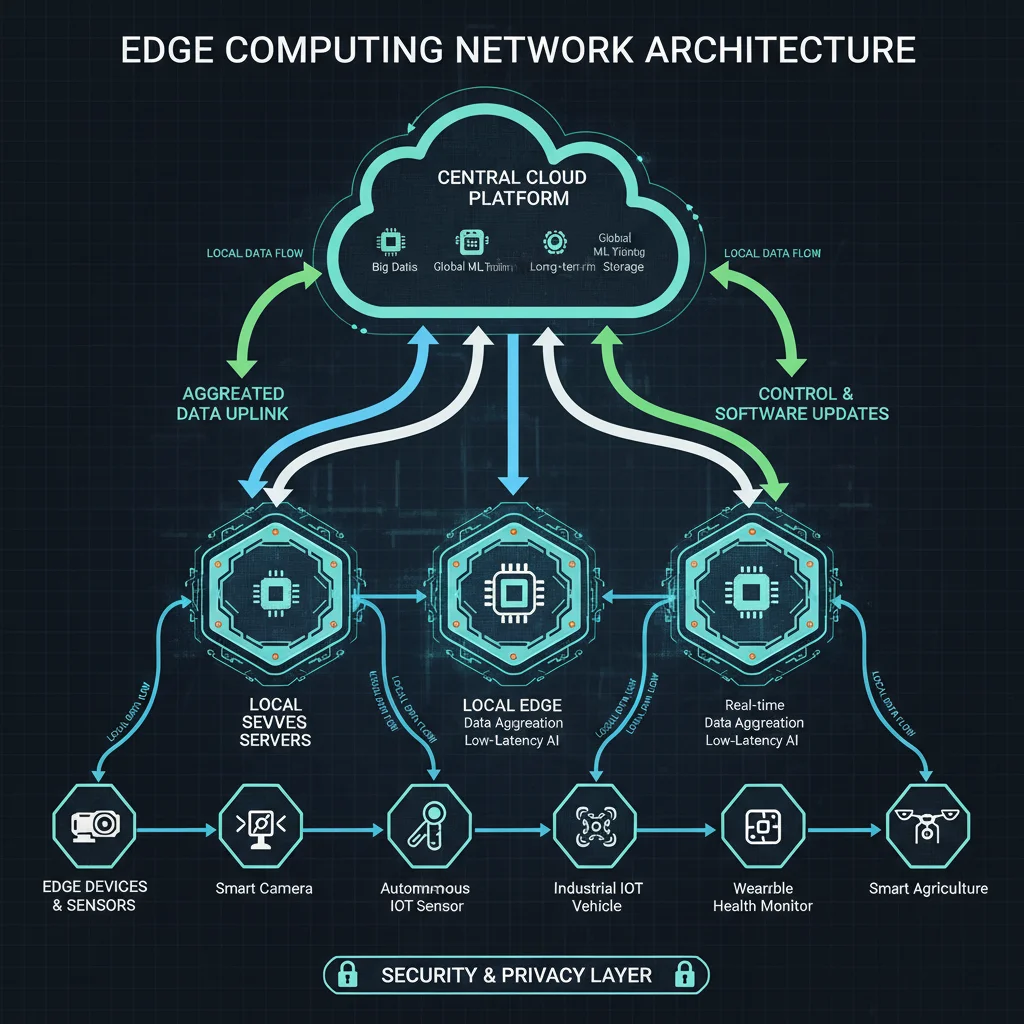
At its core, edge computing brings data processing and storage closer to the data source – the ‘edge’ of the network. This ‘edge’ can manifest in various forms: a smartphone, a smart camera, a local server in a retail store, a gateway device in a factory, or even a micro-data center at a cell tower. The key principle is to minimize the physical distance data has to travel, thereby reducing latency, conserving bandwidth, and enabling faster decision-making.
Unlike cloud computing, which centralizes resources, edge computing decentralizes them. It’s not about replacing the cloud but rather complementing it. The cloud remains vital for long-term storage, complex analytics, and overarching management, while the edge handles immediate, time-sensitive processing. This symbiotic relationship is fundamental to understanding the trajectory of the Edge Computing Future.
Key Drivers Behind the 60% Shift in US Data Processing
The prediction that 60% of US data processing will migrate to the edge by 2026 is driven by several powerful and interconnected forces. These drivers are not merely technological but also economic and operational, making the shift inevitable and highly beneficial.
1. The Explosion of IoT Devices
The Internet of Things (IoT) is perhaps the most significant catalyst for edge computing. Billions of devices, ranging from tiny sensors to complex machinery, are now generating unprecedented volumes of data. Consider smart cities, connected healthcare devices, agricultural sensors, and industrial IoT (IIoT) applications. Each of these generates a constant stream of information that, if all sent to the cloud, would overwhelm networks and incur prohibitive costs. Processing this data locally at the edge allows for immediate action and filters out irrelevant information, sending only critical insights to the cloud.
2. Demand for Real-time Processing and Low Latency
Many modern applications simply cannot tolerate latency. Autonomous vehicles, augmented reality (AR), virtual reality (VR), real-time financial trading, and critical industrial control systems all require instantaneous responses. Sending data to a central cloud and back introduces delays that can range from milliseconds to seconds, which is unacceptable for these use cases. Edge computing eliminates these bottlenecks, enabling near-instantaneous data processing and decision-making directly at the source. This is a cornerstone of the Edge Computing Future.
3. Bandwidth and Cost Optimization
Transmitting vast quantities of raw data over wide area networks (WANs) to the cloud is expensive and consumes significant bandwidth. By processing data at the edge, organizations can filter, aggregate, and analyze data locally, sending only summarized or critical information to the cloud. This significantly reduces bandwidth requirements and associated costs, making data management more economical and efficient, especially in remote or bandwidth-constrained environments.
4. Enhanced Security and Data Privacy
Processing sensitive data closer to its origin point can enhance security and privacy. Less data needs to travel across public networks, reducing exposure to potential cyber threats. Furthermore, for industries with strict regulatory compliance (e.g., healthcare, finance), keeping certain data within defined geographical or organizational boundaries through edge processing simplifies compliance efforts. The ability to anonymize or encrypt data at the edge before it ever leaves the local network adds another layer of protection, shaping a more secure Edge Computing Future.
5. Reliability and Offline Operations
Cloud connectivity is not always guaranteed, especially in remote locations or during network outages. Edge computing allows critical applications and devices to continue functioning even without constant cloud connectivity. Data can be processed and stored locally, with synchronization occurring once connectivity is restored. This resilience is vital for mission-critical operations in sectors like manufacturing, energy, and defense.
Applications and Use Cases Driving the Edge Computing Future
The versatility of edge computing means its applications span across nearly every industry. Here are some of the most impactful use cases fueling its rapid adoption and solidifying the Edge Computing Future:
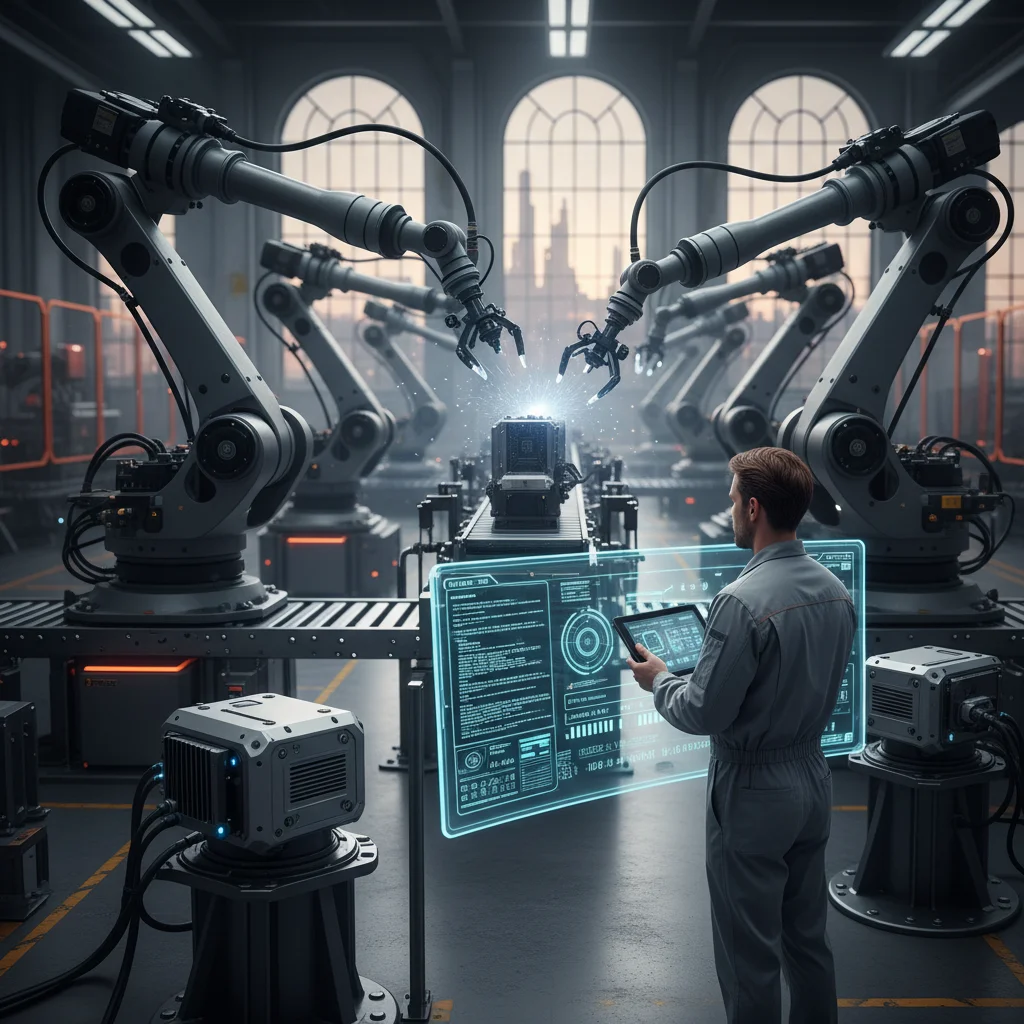
Manufacturing and Industrial IoT (IIoT)
- Predictive Maintenance: Sensors on machinery generate vast amounts of data. Edge devices analyze this data in real-time to detect anomalies, predict equipment failures, and schedule maintenance proactively, preventing costly downtime.
- Quality Control: Edge AI cameras can inspect products on assembly lines for defects with lightning speed, ensuring consistent quality without sending every image to the cloud.
- Process Optimization: Real-time analysis of production data at the edge allows for immediate adjustments to manufacturing processes, improving efficiency and output.
Autonomous Vehicles and Smart Transportation
- Real-time Decision Making: Autonomous cars are essentially ‘data centers on wheels.’ They rely on edge computing to process lidar, radar, and camera data instantly to navigate, detect obstacles, and avoid collisions.
- Traffic Management: Edge devices at intersections can analyze traffic patterns and adjust signal timings in real-time, reducing congestion.
Retail and Smart Stores
- Personalized Customer Experiences: Edge AI can analyze in-store customer behavior (anonymously) to provide personalized offers, optimize product placement, and improve store layouts.
- Inventory Management: Real-time tracking of stock levels and automated alerts for restocking can be handled at the edge, reducing out-of-stock situations.
- Loss Prevention: Edge analytics can identify suspicious activities or unusual patterns to prevent theft.
Healthcare
- Remote Patient Monitoring: Wearable devices and home sensors collect vital health data. Edge gateways can process this data locally, alerting caregivers only when critical thresholds are crossed, ensuring patient privacy and timely intervention.
- Medical Imaging Analysis: Edge AI can assist in preliminary analysis of medical images (e.g., X-rays, MRIs) at the point of care, providing faster insights to clinicians.
Smart Cities and Public Safety
- Surveillance and Security: Edge analytics on security cameras can identify unusual activity, detect intruders, or monitor public spaces for safety in real-time, reducing the need for constant human oversight.
- Environmental Monitoring: Edge sensors can monitor air quality, water levels, and noise pollution, providing immediate data for environmental management.
These examples barely scratch the surface of edge computing’s potential. As technology evolves, we will see even more innovative applications emerge, further cementing the Edge Computing Future.
Challenges and Considerations for the Edge Computing Future
While the benefits of edge computing are compelling, its widespread adoption also presents a unique set of challenges that need to be addressed for a successful Edge Computing Future.
1. Security at the Edge
Distributing computing resources across numerous edge locations inherently expands the attack surface. Securing thousands or millions of edge devices, which may operate in less physically secure environments than a centralized data center, is a complex undertaking. Robust authentication, authorization, encryption, and continuous monitoring strategies are crucial to protect data and devices at the edge.
2. Device Management and Orchestration
Managing and orchestrating a vast, geographically dispersed fleet of edge devices can be challenging. Deploying updates, patching vulnerabilities, configuring software, and monitoring performance across diverse hardware and software environments requires sophisticated management tools and strategies. This is a critical area of development for the Edge Computing Future.
3. Data Governance and Compliance
With data being processed and stored in multiple locations, ensuring compliance with data privacy regulations (e.g., GDPR, CCPA) becomes more intricate. Organizations need clear policies for data retention, access, and anonymization at the edge. The flow of data between the edge and the cloud must also adhere to strict governance rules.
4. Interoperability and Standardization
The edge ecosystem is highly fragmented, with a multitude of hardware vendors, operating systems, and communication protocols. Achieving seamless interoperability between different edge devices, platforms, and cloud services is essential for scalable deployments. Industry-wide standardization efforts are underway but remain a significant hurdle.
5. Power and Environmental Constraints
Many edge deployments occur in environments with limited power, space, or environmental control. Edge devices must be designed to be energy-efficient, ruggedized, and capable of operating reliably in harsh conditions. This constraint often dictates the type and scale of processing that can occur at the very edge.
6. Skills Gap
The specialized knowledge required to design, deploy, and manage edge computing solutions is in high demand. There’s a growing need for professionals skilled in areas like distributed systems, IoT security, embedded programming, and cloud-to-edge integration. Bridging this skills gap is vital for realizing the full potential of the Edge Computing Future.
The Symbiotic Relationship: Edge and Cloud in the Future
It’s important to reiterate that edge computing is not a replacement for cloud computing. Instead, it represents a strategic extension of the cloud, forming a powerful, distributed computing continuum. The Edge Computing Future is inherently hybrid.
- Edge for Immediate Action: The edge handles real-time data processing, filtering, and localized decision-making where latency is critical. It acts as the first line of defense and intelligence.
- Cloud for Long-term Intelligence: The cloud remains the hub for large-scale data aggregation, complex analytics (e.g., training AI models), long-term storage, and global management of edge deployments. It provides the overarching intelligence and scalability.
Data flows intelligently between these two layers. Raw, time-sensitive data is processed at the edge, while aggregated, refined, and less time-critical data is sent to the cloud for deeper analysis, historical archiving, and strategic insights. This integrated approach maximizes the strengths of both paradigms, creating a more resilient, efficient, and intelligent digital infrastructure.
The Role of AI and 5G in Accelerating the Edge Computing Future
The growth of edge computing is inextricably linked to advancements in Artificial Intelligence (AI) and 5G connectivity. These technologies act as powerful accelerants, pushing the boundaries of what’s possible at the edge.
AI at the Edge
Deploying AI models directly on edge devices, known as ‘Edge AI,’ is a game-changer. Instead of sending all data to the cloud for AI inference, lightweight AI models can run locally on devices like smart cameras, industrial sensors, or drones. This enables:
- Real-time Inference: AI models can make predictions or classifications instantly, without network delays.
- Reduced Bandwidth: Only the results of the AI analysis, not the raw data, need to be transmitted.
- Enhanced Privacy: Sensitive data can be processed on-device, minimizing privacy risks.
Edge AI is crucial for applications like facial recognition, object detection in autonomous systems, predictive maintenance, and personalized recommendations in retail. The cloud is still vital for training these complex AI models, but the edge is becoming the primary location for their deployment and execution, driving the Edge Computing Future.
5G and the Edge
5G networks, with their ultra-low latency, high bandwidth, and massive connection density, are the perfect complement to edge computing. 5G provides the high-speed, reliable connectivity needed to efficiently transfer data between edge devices, local edge servers, and the cloud. This synergy enables:
- Mobile Edge Computing (MEC): 5G base stations can host edge computing resources, bringing processing extremely close to mobile users and IoT devices.
- Enhanced AR/VR Experiences: The combination of 5G’s speed and edge computing’s low latency makes highly interactive and immersive AR/VR applications feasible.
- Massive IoT Deployments: 5G can connect billions of edge devices, allowing for unprecedented scale in IoT deployments across various sectors.
The combined power of AI and 5G makes the Edge Computing Future not just a possibility, but an impending reality, enabling a new generation of intelligent, responsive, and connected applications.
The Economic Impact and Future Outlook
The shift towards edge computing carries significant economic implications. Companies that embrace this paradigm stand to gain a competitive advantage through:
- Operational Efficiency: Reduced latency, optimized bandwidth, and real-time insights lead to more efficient operations and lower costs.
- New Revenue Streams: Edge computing enables new services and business models, particularly in areas like smart manufacturing, connected health, and intelligent infrastructure.
- Innovation: The ability to process data closer to the source fosters rapid prototyping and deployment of innovative applications that were previously impossible.
- Resilience: Distributed processing enhances system resilience and reduces reliance on constant cloud connectivity, minimizing downtime and business interruption.
Market forecasts consistently point to explosive growth in the edge computing market, with investments pouring into hardware, software, and services. This growth will create new jobs, drive technological innovation, and reshape various industries. The prediction of 60% of US data processing shifting to the edge by 2026 is a strong indicator of this profound economic transformation.
Preparing for the Edge Computing Future
For organizations looking to capitalize on this trend, strategic planning is essential:
- Assess Current Infrastructure: Identify existing data generation points and potential edge use cases.
- Pilot Programs: Start with small-scale edge deployments to understand the technology and its impact.
- Choose the Right Partners: Collaborate with vendors offering robust edge hardware, software, and management platforms.
- Focus on Security: Implement a comprehensive security strategy that addresses the unique challenges of distributed edge environments.
- Invest in Skills: Develop internal expertise or seek external talent with knowledge of edge computing, IoT, and AI.
- Adopt a Hybrid Approach: Plan for seamless integration between edge and cloud resources.
The Edge Computing Future is not a distant vision; it is rapidly unfolding. By proactively preparing for this shift, businesses can position themselves at the forefront of innovation, ensuring they remain competitive and capable of leveraging the full power of their data.
Conclusion
The forecast that 60% of US data processing will shift closer to devices by 2026 marks a pivotal moment in the evolution of digital technology. Edge computing, driven by the proliferation of IoT, the demand for real-time insights, and advancements in AI and 5G, is fundamentally altering how we collect, process, and utilize data. It promises a future of unprecedented efficiency, enhanced security, and transformative applications across every sector.
While challenges in security, management, and interoperability remain, the benefits of reduced latency, optimized bandwidth, and increased resilience are too significant to ignore. The symbiotic relationship between the edge and the cloud will define the next era of computing, creating a distributed, intelligent, and highly responsive digital ecosystem. Embracing the Edge Computing Future is no longer an option but a strategic imperative for any organization aiming to thrive in the increasingly data-driven world.