MicroLED vs. QD-OLED: The Ultimate Display Technology Showdown for 2026
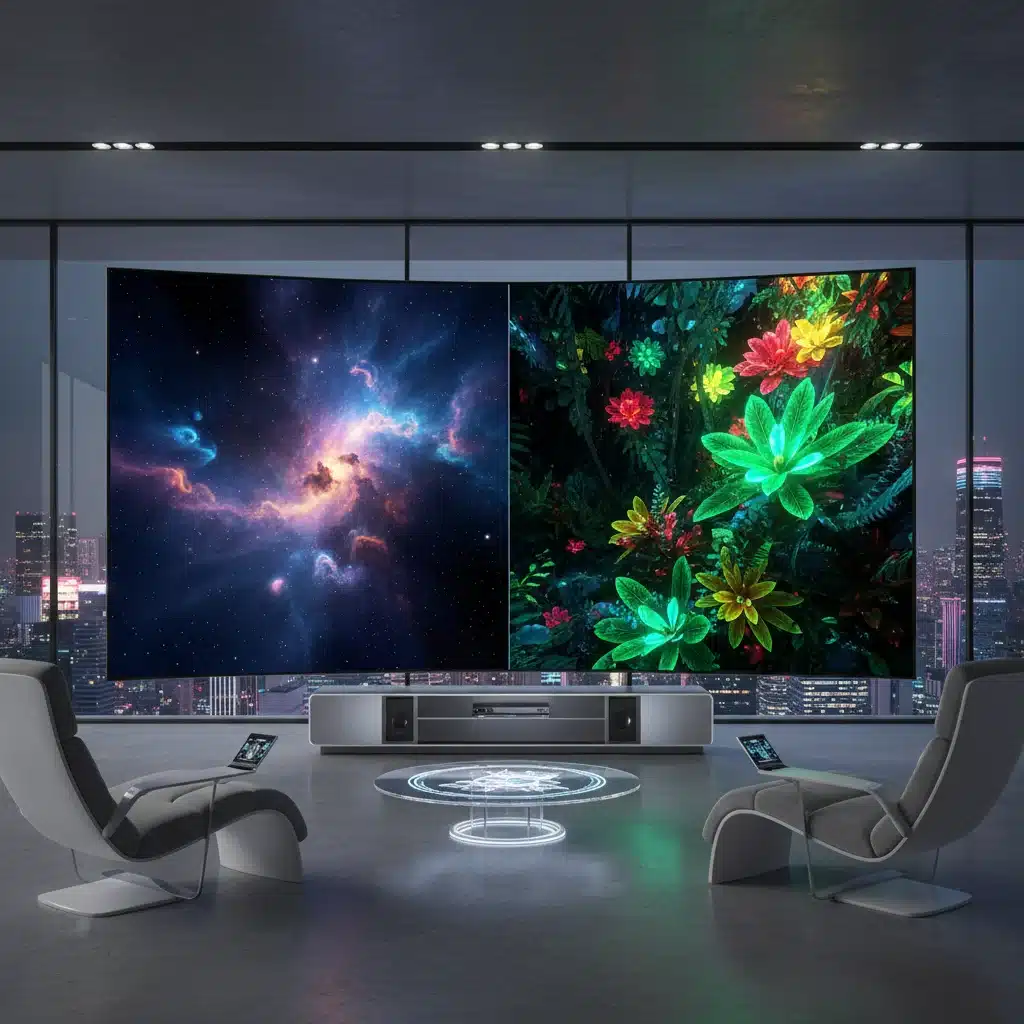
MicroLED vs. QD-OLED: The Ultimate Display Technology Showdown for 2026
The world of display technology is in a constant state of evolution, pushing the boundaries of visual fidelity and user experience. As we inch closer to 2026, two groundbreaking technologies, MicroLED and QD-OLED, are emerging as frontrunners, each promising to redefine how we interact with our digital screens. From colossal living room televisions to the most intimate of wearables, the battle for visual supremacy is heating up. But what exactly are these technologies, and which one is poised to dominate your next device purchase? This comprehensive article will delve deep into the intricacies of MicroLED and QD-OLED, offering a head-to-head comparison, exploring their strengths, weaknesses, and potential market trajectories by 2026.
Understanding the nuances of these advanced displays is crucial for consumers, industry professionals, and enthusiasts alike. We’ll break down the core principles that govern their operation, analyze their performance metrics, discuss the challenges and opportunities in their manufacturing, and project their impact on various segments of the consumer electronics market. Prepare to embark on an insightful journey into the future of display technology, where every pixel tells a story of innovation and ambition.
The Dawn of Next-Generation Displays: An Overview
For decades, LCD (Liquid Crystal Display) technology, often backlit by LEDs, has been the dominant force in screens, offering a balance of performance and affordability. More recently, OLED (Organic Light-Emitting Diode) has captivated audiences with its perfect blacks and vibrant colors, thanks to its self-emissive pixels. However, the pursuit of even greater brightness, longevity, and color accuracy has led to the development of MicroLED and QD-OLED.
What is MicroLED Technology?
MicroLED represents a revolutionary leap, fundamentally different from its predecessors. Imagine millions of microscopic, individual LEDs (Light-Emitting Diodes) – each no larger than a grain of sand – serving as individual pixel elements. Unlike OLED, which uses organic compounds that can degrade over time, MicroLEDs are inorganic, offering superior longevity and resistance to burn-in. Each sub-pixel is self-emissive, meaning it generates its own light, allowing for absolute black levels when turned off, similar to OLED. However, MicroLEDs boast significantly higher brightness capabilities, making them ideal for challenging viewing environments and HDR content.
The modular nature of MicroLED is another key differentiator. Displays can be assembled from smaller, bezel-less modules, allowing for virtually any screen size or aspect ratio without the limitations of traditional panel manufacturing. This scalability opens up possibilities for truly enormous, seamless displays in both consumer and commercial applications. The potential for a truly immersive and bright visual experience is immense, positioning MicroLED as a strong contender in the high-end market.
Introducing QD-OLED Technology
QD-OLED, or Quantum Dot Organic Light-Emitting Diode, is a hybrid technology that seeks to combine the best attributes of OLED with the enhanced color performance of quantum dots. At its core, QD-OLED utilizes a blue OLED light source. This blue light then passes through a layer of quantum dots – microscopic semiconductor nanocrystals that, when illuminated, emit light at specific wavelengths, resulting in incredibly pure and vibrant red and green colors. The blue light source itself provides the blue component, creating a full-color spectrum.
The advantage of this approach is two-fold: it leverages the self-emissive nature of OLEDs for perfect blacks and infinite contrast, while the quantum dot layer significantly expands the color volume and accuracy, surpassing traditional OLED displays. This results in a picture that is not only deep and rich but also incredibly bright and true-to-life, especially in its color representation. QD-OLED aims to address some of the brightness limitations and color purity challenges that conventional OLEDs sometimes face, offering a compelling upgrade for discerning viewers.
MicroLED vs. QD-OLED: A Head-to-Head Technical Comparison
To truly understand which technology might win the MicroLED QD-OLED comparison, we need to dissect their technical specifications and real-world performance potential. Each has distinct advantages and disadvantages that will influence their adoption and suitability for different applications.
Brightness and HDR Performance
When it comes to brightness, MicroLED holds a significant theoretical advantage. Because each pixel is an individual, inorganic LED, it can achieve extremely high peak brightness levels – far exceeding even the brightest OLEDs or QD-OLEDs. This makes MicroLED exceptionally well-suited for High Dynamic Range (HDR) content, where intense highlights and deep shadows are crucial for a lifelike image. The ability to individually control millions of light sources without blooming or halo effects is unparalleled.
QD-OLED, while brighter than conventional white-OLED (W-OLED) panels, still operates within the inherent limitations of organic light-emitting materials. It can achieve impressive peak brightness, particularly for specular highlights, and its color volume at higher brightness levels is superior to W-OLED. However, it is unlikely to reach the sustained, ultra-high brightness levels that MicroLED is capable of, especially for full-screen white content.
Black Levels and Contrast Ratio
Both MicroLED and QD-OLED excel in black levels and contrast ratio, thanks to their self-emissive nature. When a pixel is off, it emits no light, resulting in perfect, inky blacks and an ‘infinite’ contrast ratio. This is a fundamental advantage over backlit LCD technologies, which can suffer from light bleed and ‘grey’ blacks.
In this regard, there’s little to differentiate between the two. Both offer an unparalleled visual experience where dark scenes are truly dark, enhancing depth and realism. The ability to precisely control light at the pixel level is a shared strength that elevates them above most other display technologies.
Color Accuracy and Volume
Color performance is a battleground where both technologies shine, albeit through different mechanisms. QD-OLED, with its quantum dot layer, is designed for exceptional color accuracy and a wide color gamut. Quantum dots convert blue light into highly saturated red and green, leading to incredibly pure primary colors. This results in a very high color volume, meaning colors retain their vibrancy and saturation even at higher brightness levels.
MicroLED also offers excellent color accuracy, as each LED can be engineered to emit light at precise wavelengths. Its high brightness capabilities mean that colors can be displayed with incredible intensity and purity across a wide range of luminance levels. While QD-OLED might have a slight edge in raw color volume due to the efficiency of quantum dots, MicroLED’s ability to maintain color fidelity at extreme brightness levels is a significant advantage, especially for very bright HDR content.
Longevity and Burn-in Resistance
This is where MicroLED potentially pulls ahead. Being composed of inorganic materials, MicroLEDs are inherently more robust and resistant to degradation over time compared to the organic compounds used in OLEDs. This translates to a significantly longer lifespan and virtually eliminates the risk of burn-in, which has been a persistent concern for some OLED users, especially in static image scenarios or professional applications.
QD-OLED, while incorporating quantum dots, still relies on blue OLED emitters. Blue OLEDs are typically the fastest degrading component in an OLED stack. While manufacturers are constantly improving their longevity, QD-OLED may still exhibit some susceptibility to burn-in over extended periods, particularly with static, high-brightness elements. However, advancements in panel design and pixel refresh technologies are continually mitigating this risk.
Power Efficiency
Power efficiency is a complex metric that depends heavily on the content being displayed. For dark content, both MicroLED and QD-OLED can be very efficient, as individual pixels can be turned off. However, at higher brightness levels, the efficiency landscape shifts.
MicroLEDs, being highly efficient inorganic LEDs, have the potential for excellent power efficiency, especially as the technology matures. The ability to precisely control light output for each pixel means less wasted energy. QD-OLED is also efficient, particularly when compared to backlit LCDs, but the process of converting blue light to red and green via quantum dots involves some energy loss. For very bright, full-screen white content, MicroLED is likely to be more power-efficient.
Manufacturing Challenges and Scalability
The journey from laboratory breakthrough to mass-market product is fraught with challenges, particularly in the realm of advanced display technologies. The manufacturing processes for both MicroLED and QD-OLED are incredibly complex and currently contribute significantly to their high cost.
MicroLED Manufacturing Hurdles
The primary challenge for MicroLED is known as ‘mass transfer.’ Imagine precisely placing millions of microscopic LEDs onto a substrate with extreme accuracy and speed. This process is incredibly difficult and expensive. Any defects in placement or functionality of even a small percentage of these tiny LEDs can render a module unusable. Yield rates are currently low, driving up costs significantly.
Furthermore, the individual control of each LED requires complex driving circuitry, adding to the manufacturing complexity. While the modular nature allows for large screens, the cost per square inch remains exceptionally high, confining MicroLED to ultra-premium, niche markets like custom home theater installations or commercial displays for the foreseeable future. Significant breakthroughs in mass transfer technology are required to bring MicroLED to mainstream consumer devices.
QD-OLED Manufacturing Advantages
QD-OLED leverages existing OLED manufacturing infrastructure to some extent, particularly for the blue OLED light source. This provides a head start compared to MicroLED, which requires entirely new production lines. The integration of the quantum dot layer is also a more manageable process than the mass transfer of individual MicroLEDs.
However, QD-OLED still faces its own set of manufacturing complexities, particularly in ensuring uniform blue OLED emission and precise application of the quantum dot materials across large panels. While more scalable than MicroLED in the short term, producing QD-OLED panels at competitive prices for a wide range of devices still requires continuous optimization and investment.
Market Trends and Projections for 2026
Looking ahead to 2026, the landscape for display technology will likely see both MicroLED and QD-OLED carving out their respective niches. The widespread adoption of either will hinge on production scalability, cost reduction, and consumer demand.
MicroLED’s Market Niche by 2026
By 2026, MicroLED is expected to remain a premium, high-end technology. Its primary markets will likely be:
- Ultra-Large Format Displays: Custom home theaters, luxury yachts, and commercial installations where budget is less of a concern and the ultimate visual experience is paramount.
- Professional Applications: Command centers, broadcast studios, and other environments demanding extreme brightness, longevity, and perfect color reproduction.
- Early Adopter Luxury: A very select segment of the consumer market willing to pay a significant premium for the absolute best display technology available.
While we might see smaller MicroLED displays in specialized applications or concept devices, widespread adoption in consumer electronics like smartphones or mainstream TVs is improbable by 2026 due to cost and manufacturing limitations. However, continued research and development could accelerate its path to affordability in the long term.
QD-OLED’s Market Impact by 2026
QD-OLED is poised for a more significant impact on the mainstream consumer market by 2026. Its ability to offer a noticeable upgrade over traditional OLEDs in terms of brightness and color volume, while leveraging existing manufacturing expertise, makes it a compelling proposition.
- Premium TVs and Monitors: QD-OLED will likely establish itself as a leading choice for high-end televisions and gaming monitors, appealing to enthusiasts and professionals who demand superior image quality, color accuracy, and HDR performance.
- High-End Laptops and Tablets: As manufacturing scales, we could see QD-OLED panels appearing in premium portable devices, offering stunning visuals for content creation and consumption.
- Smartphones and Wearables (Limited): While more challenging due to size and power constraints, the benefits of QD-OLED could eventually trickle down to flagship smartphones and smartwatches, though perhaps not in widespread adoption by 2026.
QD-OLED’s trajectory suggests it will compete directly with and potentially surpass traditional OLED in the premium segment, offering a compelling blend of OLED’s strengths with enhanced color and brightness.
Applications Beyond the Living Room
The impact of MicroLED QD-OLED comparison extends far beyond just televisions. These technologies have the potential to revolutionize a wide array of devices.
Smartphones and Wearables
For smartphones, power efficiency, brightness for outdoor visibility, and durability are paramount. MicroLED, with its inorganic nature and high brightness, is an ideal candidate for future mobile devices, potentially offering unparalleled outdoor readability and battery life improvements (if power consumption can be optimized for smaller form factors). However, the cost and miniaturization challenges are immense.
QD-OLED could also find its way into high-end smartphones and smartwatches, offering superior color and brightness compared to current OLEDs. Its relatively mature manufacturing process compared to MicroLED might give it an edge in reaching these smaller form factors sooner, albeit with ongoing efforts to reduce power consumption and cost.
Automotive Displays
The automotive industry is increasingly integrating sophisticated displays into vehicle dashboards and infotainment systems. Here, durability, wide operating temperature ranges, and high brightness for visibility in varying light conditions are critical. MicroLED’s inorganic nature and extreme brightness make it highly attractive for automotive applications, offering a robust and visually stunning solution. Imagine transparent MicroLED displays for augmented reality windshields – a future possibility.
QD-OLED could also play a role, particularly where vibrant colors and deep blacks are desired for a premium in-car experience. However, the extreme environmental conditions and long lifespan requirements of automotive applications might favor MicroLED in the long run, assuming cost barriers can be overcome.
Virtual and Augmented Reality (VR/AR)
For VR and AR headsets, ultra-high pixel density, low latency, and extreme brightness are essential for a truly immersive and comfortable experience. MicroLED, with its ability to achieve incredibly small pixel sizes and high brightness, is considered a holy grail for VR/AR. Its potential to create displays with thousands of pixels per inch (PPI) could eliminate the ‘screen door effect’ and enable incredibly realistic virtual worlds.
QD-OLED, while offering excellent contrast and color, might struggle to reach the pixel densities and brightness levels required for the most demanding AR applications, though it could be a strong contender for more consumer-oriented VR headsets where cost and current availability are factors.
The Consumer’s Perspective: What Does This Mean for Your Next Purchase?
For the average consumer, the MicroLED QD-OLED comparison boils down to a few key considerations: performance, price, and availability. By 2026, the choice will largely depend on your budget and what you prioritize in a display.
If Money is No Object…
If you’re seeking the absolute pinnacle of display technology and have an unlimited budget, MicroLED will likely offer the most impressive visual experience, particularly for large-format displays. Its unmatched brightness, perfect blacks, and longevity make it the ultimate choice for those who demand the very best, regardless of cost.
For Premium Performance at a More Attainable Price…
QD-OLED will likely be the sweet spot for many discerning consumers by 2026. It offers a significant upgrade over traditional OLEDs and LCDs, delivering stunning color volume, excellent brightness, and perfect blacks at a price point that, while premium, will be considerably more accessible than MicroLED. It will be the go-to for enthusiasts looking for a top-tier TV or monitor.
Considering Longevity and Burn-in…
If burn-in is a major concern, especially for devices that display static content for long periods (e.g., computer monitors, digital signage), MicroLED’s inorganic nature provides a distinct advantage. While QD-OLED is improving, MicroLED offers peace of mind regarding long-term image retention.
Challenges and the Road Ahead
Despite their immense potential, both MicroLED and QD-OLED face significant hurdles. For MicroLED, the ‘mass transfer’ problem remains the most critical barrier to widespread adoption. Until this manufacturing process can be made more efficient and cost-effective, MicroLED will remain a luxury item.
QD-OLED, while more scalable, still needs to continually improve its blue OLED lifespan and further optimize its power efficiency to compete effectively across all device categories. Competition from increasingly sophisticated W-OLED panels and advancements in mini-LED backlit LCDs will also keep pressure on pricing and performance.
Furthermore, the industry needs to establish robust standards for measuring and comparing these new technologies. Clear metrics for color volume, sustained brightness, and longevity will be crucial for consumers to make informed decisions.
Conclusion: The Future is Bright, and Colorful
The MicroLED QD-OLED comparison reveals a fascinating future for display technology. Both innovations represent significant advancements, each with unique strengths. MicroLED, with its unparalleled brightness, longevity, and modularity, is poised to dominate the ultra-premium and large-format segments, pushing the boundaries of what’s visually possible.
QD-OLED, by combining the perfect blacks of OLED with the vibrant, wide color gamut of quantum dots, offers a compelling proposition for the high-end consumer market, delivering an exceptional viewing experience at a more accessible price point. By 2026, we can expect QD-OLED to be a strong contender in premium TVs and monitors, while MicroLED will continue its slow but steady march towards broader adoption, starting from the very top tier.
Ultimately, the competition between these two technologies will drive innovation, leading to better, more immersive, and more visually stunning displays for all of us. Whether you’re a gamer, a cinephile, a creative professional, or simply someone who appreciates a beautiful screen, the next few years promise an exciting evolution in how we see the digital world.
Keep an eye on these developments, as your next device purchase might just feature one of these incredible display technologies, bringing the future of visuals directly to your fingertips.