Battery Breakthroughs 2026: The Latest Advances in Solid-State Technology Offering 40% Longer Device Life for Portable Electronics
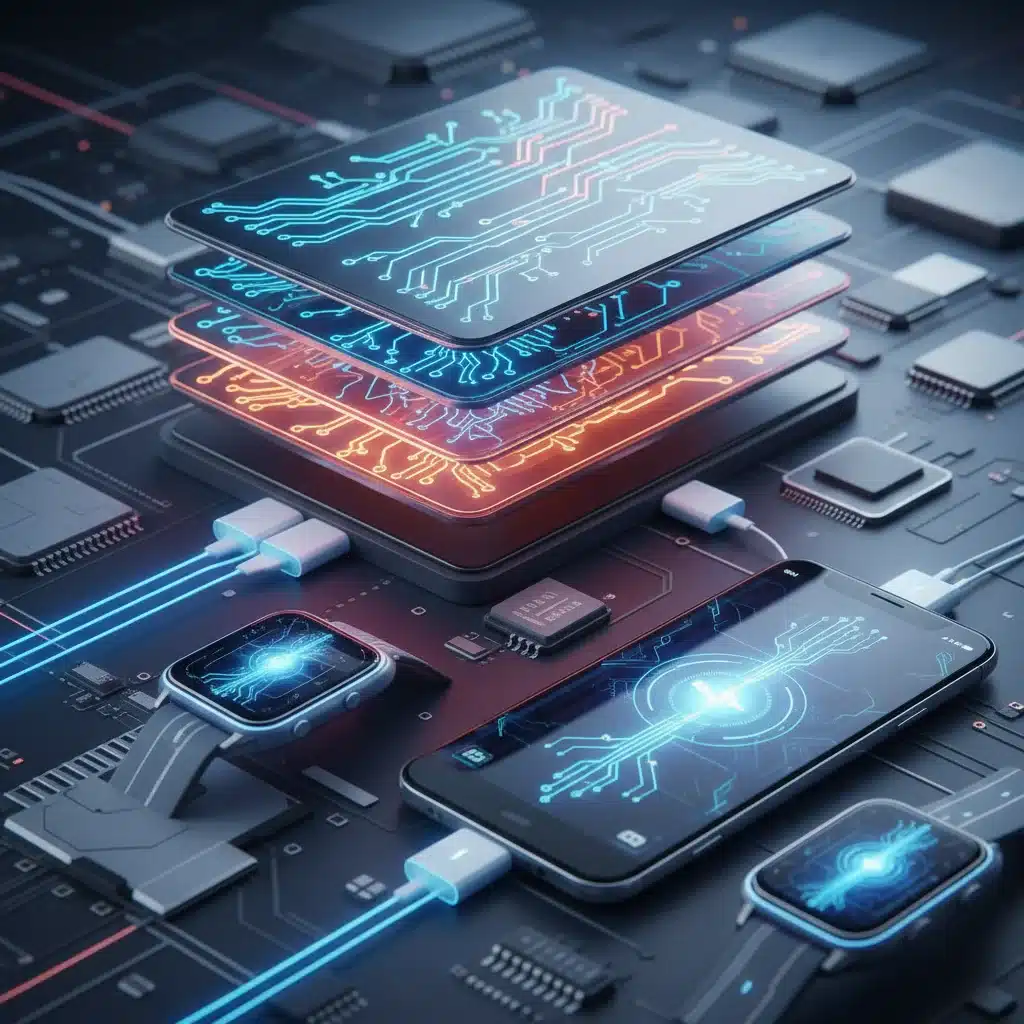
The quest for longer-lasting, safer, and more efficient power sources has been a relentless pursuit in the world of technology. For years, lithium-ion batteries have been the workhorse, powering everything from our smartphones to electric vehicles. However, their limitations—ranging from energy density to safety concerns—have always spurred innovation. Now, as we look towards 2026, the landscape of energy storage is on the cusp of a monumental shift, largely thanks to groundbreaking solid-state battery advances. These advancements are not just incremental improvements; they represent a fundamental rethinking of battery design, promising up to 40% longer device life for our beloved portable electronics and a new era of power.
Imagine a world where your smartphone lasts days on a single charge, your smartwatch monitors your health for weeks without needing a top-up, and your laptop powers through an entire cross-country flight with charge to spare. This is the promise of solid-state battery technology. Unlike their liquid-electrolyte predecessors, solid-state batteries utilize a solid electrolyte, offering a multitude of benefits that address many of the drawbacks of current battery solutions. This article delves deep into the exciting developments defining solid-state battery advances in 2026, exploring the science, the implications for consumers and industries, and what the future truly holds.
The Fundamental Shift: What Makes Solid-State Batteries Revolutionary?
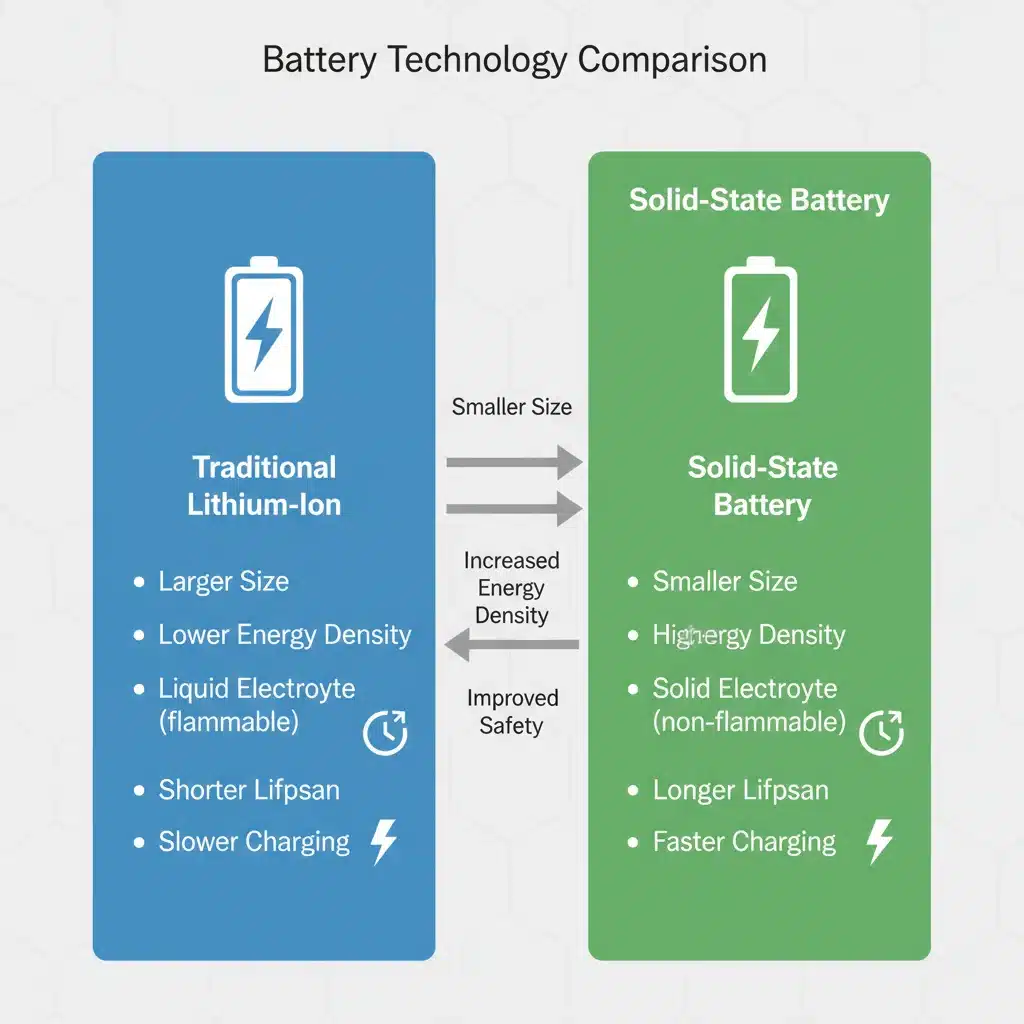
At the heart of the solid-state battery advances lies a crucial change: the replacement of the flammable liquid or gel electrolyte found in traditional lithium-ion batteries with a solid material. This seemingly simple alteration unlocks a cascade of advantages. Firstly, safety is dramatically enhanced. Liquid electrolytes are prone to leakage and can be highly flammable, leading to thermal runaway and potential fires – a concern that has plagued lithium-ion technology. Solid electrolytes, by their very nature, eliminate this risk, making devices safer for consumers and opening up new possibilities for battery integration in various applications.
Secondly, energy density sees a significant boost. The solid nature of the electrolyte allows for more compact battery designs. This means more active material can be packed into the same volume, or even a smaller volume, translating directly into longer device life. Researchers are achieving higher voltage ranges and greater capacity per unit of weight and volume, which is critical for portable electronics where space and weight are at a premium. This is a core component of the solid-state battery advances we are witnessing.
Thirdly, solid-state batteries are expected to offer faster charging times and a longer cycle life. The improved stability of the solid electrolyte can reduce degradation over time, allowing for more charge-discharge cycles before significant capacity loss. This extends the overall lifespan of the device and reduces the frequency of battery replacements, offering economic and environmental benefits. The impact on user experience cannot be overstated: less time tethered to a charger and more time enjoying uninterrupted device use.
Key Solid-State Battery Advances in 2026
The year 2026 is poised to be a landmark year for solid-state battery technology, with several key areas of development reaching maturity and entering commercialization. Let’s explore some of the most impactful solid-state battery advances:
1. New Electrolyte Materials: The Quest for Optimal Conductivity
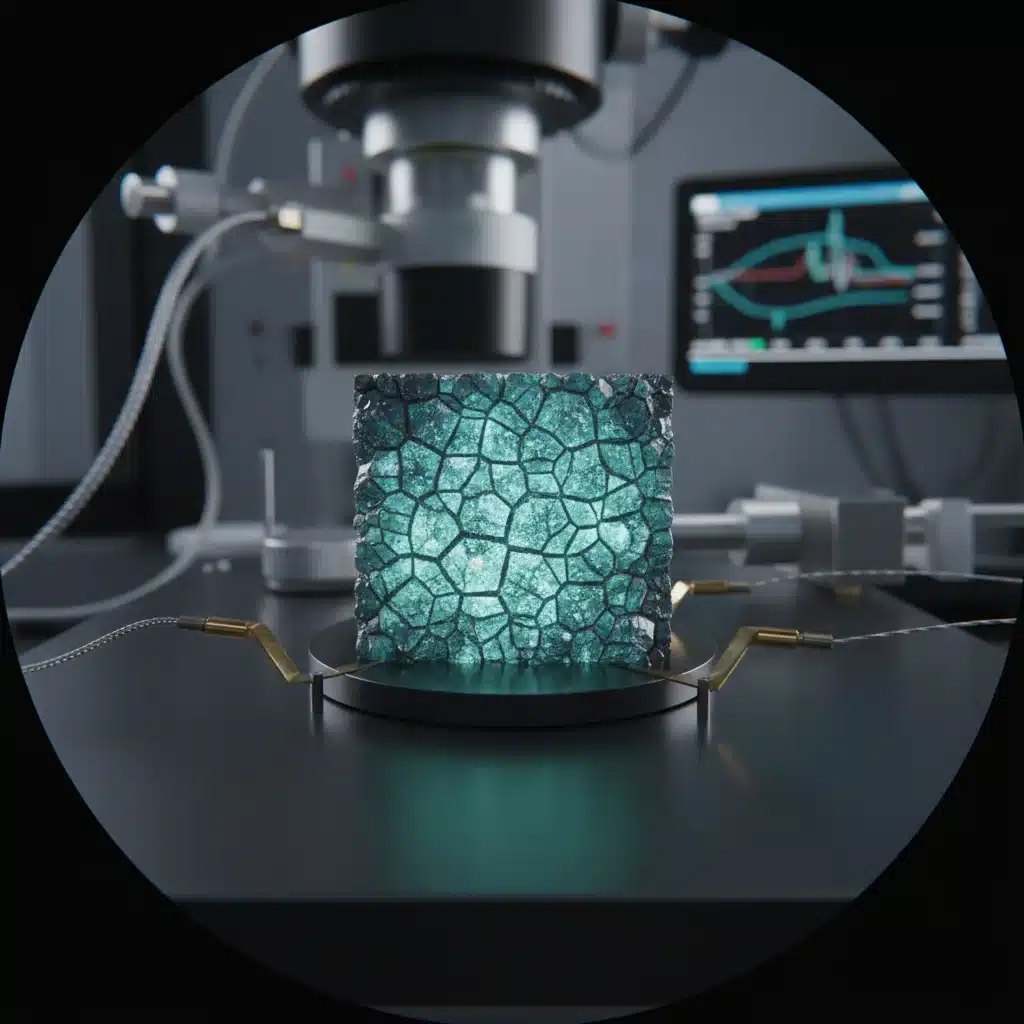
While the concept of solid electrolytes isn’t new, finding materials that offer high ionic conductivity at room temperature, while also being stable and cost-effective, has been a major hurdle. Recent breakthroughs, particularly in sulfide and oxide-based solid electrolytes, are changing this. Sulfide-based electrolytes, such as Li10GeP2S12 (LGPS), have shown exceptional ionic conductivity, rivaling that of liquid electrolytes. However, their sensitivity to air and moisture requires specialized manufacturing processes. Oxide-based electrolytes, like garnet-type materials (e.g., Li7La3Zr2O12 or LLZO), offer greater stability and are less reactive, making them attractive for large-scale production. The ongoing research in polymer solid electrolytes also promises flexible and safe options, particularly for wearable devices.
The integration of these advanced materials is what’s truly driving the 40% longer device life projections. By optimizing the electrolyte, charge carriers can move more freely and efficiently, reducing internal resistance and improving overall battery performance. This material science innovation is at the forefront of solid-state battery advances.
2. Anode and Cathode Innovations: Maximizing Capacity
Beyond the electrolyte, significant progress is being made in anode and cathode materials. The holy grail for solid-state batteries is the use of a pure lithium metal anode. Lithium metal offers the highest theoretical specific capacity of any anode material, meaning it can store significantly more energy than the graphite anodes used in current lithium-ion batteries. However, its reactivity and tendency to form dendrites (tree-like structures that can pierce the separator and cause short circuits) have historically been major challenges.
In 2026, researchers are perfecting solid electrolyte interfaces (SEIs) that effectively suppress dendrite formation, allowing for the safe and stable use of lithium metal anodes. This is a game-changer for energy density. On the cathode side, high-nickel layered oxides and sulfur-based cathodes are being developed to complement the high capacity of lithium metal anodes, further pushing the boundaries of what’s possible in terms of energy storage. These synergistic developments across all battery components are crucial for realizing the full potential of solid-state battery advances.
3. Manufacturing Breakthroughs: Scaling Production
One of the biggest hurdles for solid-state batteries has been the challenge of scaling manufacturing to meet commercial demand at a competitive cost. Traditional battery manufacturing processes are not directly transferable to solid-state designs. However, 2026 is seeing significant investment and innovation in this area. New deposition techniques, such as atomic layer deposition (ALD) and chemical vapor deposition (CVD), are being refined to create ultra-thin, highly uniform solid electrolyte layers. Furthermore, roll-to-roll processing techniques, adapted from other industries, are enabling continuous, high-volume production of solid-state battery cells.
Automation and artificial intelligence are also playing a critical role in optimizing manufacturing parameters, reducing defects, and improving yield. These manufacturing solid-state battery advances are crucial for bringing these cutting-edge batteries from the lab to mass-market products, ensuring they are not just technologically superior but also economically viable. Without efficient manufacturing, even the most revolutionary technology remains out of reach for the average consumer.
Impact on Portable Electronics: 40% Longer Device Life and Beyond
The implications of these solid-state battery advances for portable electronics are nothing short of transformative. A 40% increase in device life means:
- Smartphones: Imagine getting two full days, or even more, of heavy use from your smartphone without needing to charge. This significantly reduces range anxiety and enhances user freedom.
- Wearables: Smartwatches and fitness trackers could last weeks on a single charge, making them truly always-on health companions. This opens up new possibilities for continuous monitoring and more sophisticated features without constant recharging.
- Laptops and Tablets: Business professionals and students could work an entire workday or attend multiple classes without searching for an outlet, boosting productivity and convenience.
- IoT Devices: The vast network of Internet of Things devices, from smart home sensors to industrial monitoring equipment, could operate autonomously for much longer periods, reducing maintenance costs and expanding deployment possibilities.
Beyond just longer life, the enhanced safety of solid-state batteries allows for more flexible device designs. Without the risk of leakage or thermal runaway, batteries can be integrated into thinner, more aesthetically pleasing form factors. This means sleeker smartphones, lighter laptops, and more comfortable wearables. The combination of increased power, safety, and design flexibility will undoubtedly spur a new wave of innovation in consumer electronics.
Beyond Portable Electronics: A Wider Horizon for Solid-State Batteries
While the focus here is on portable electronics, it’s important to recognize that the solid-state battery advances of 2026 have far-reaching implications across numerous sectors:
Electric Vehicles (EVs)
Perhaps the most anticipated application outside of consumer electronics is in electric vehicles. Solid-state batteries promise significantly longer range, faster charging times, and crucially, vastly improved safety compared to current EV batteries. The elimination of flammable liquid electrolytes addresses a major concern for both manufacturers and consumers. With higher energy density, EVs could become lighter, more efficient, and more affordable, accelerating the transition to sustainable transportation.
Grid-Scale Energy Storage
The ability to safely and efficiently store renewable energy, such as solar and wind power, is critical for stabilizing grids and reducing reliance on fossil fuels. Solid-state batteries, with their long cycle life, high energy density, and inherent safety, are ideal candidates for grid-scale applications. They could enable more reliable integration of intermittent renewable sources, paving the way for a truly sustainable energy future.
Aerospace and Defense
For drones, electric aircraft, and military applications, the combination of high energy density, low weight, and extreme safety is paramount. Solid-state batteries could enable longer flight times, greater payloads, and more robust power systems in demanding environments.
Challenges and the Road Ahead
Despite the incredible progress in solid-state battery advances, challenges remain. Cost is still a significant factor. The specialized materials and complex manufacturing processes currently make solid-state batteries more expensive than their lithium-ion counterparts. However, as production scales and technologies mature, costs are expected to decrease rapidly, following a similar trajectory to that of lithium-ion batteries in their early stages.
Another challenge is ensuring long-term reliability and performance under a wide range of operating conditions. While laboratory results are promising, real-world deployment requires extensive testing and validation to ensure durability, especially in extreme temperatures or under heavy usage. Research is ongoing to address interfacial resistance issues between the solid electrolyte and electrodes, which can affect power delivery and charging speed.
Standardization is also a key consideration. As various companies and research institutions develop their own proprietary solid-state battery chemistries and designs, establishing industry standards will be crucial for widespread adoption and interoperability. Collaborative efforts across the industry will help accelerate this process.
The Future is Electrifying: A Glimpse Beyond 2026
The solid-state battery advances we are witnessing in 2026 are just the beginning. Looking beyond, we can anticipate even greater innovations. Further improvements in energy density could lead to devices that last for weeks on a single charge, or EVs with ranges exceeding 1000 miles. The integration of artificial intelligence and machine learning in battery management systems will optimize performance, predict degradation, and enhance safety even further.
We might also see the emergence of multi-functional solid-state batteries that not only store energy but also perform other tasks, suchando as sensing or structural support within devices. Imagine a device casing that itself is a battery, completely reimagining product design and efficiency. Recycling and sustainability efforts will also become paramount, ensuring that these advanced batteries are part of a truly circular economy.
The shift to solid-state technology is not merely an upgrade; it’s a paradigm shift that will redefine our relationship with portable electronics and energy in general. It promises a future where power is more abundant, safer, and seamlessly integrated into our daily lives.
Conclusion: Powering the Next Generation of Innovation
The year 2026 marks a pivotal moment in battery technology, with solid-state battery advances poised to revolutionize portable electronics and beyond. The promise of up to 40% longer device life, coupled with enhanced safety and faster charging, is set to transform how we interact with our digital world. From smartphones that last for days to electric vehicles with unprecedented range, the impact will be profound and far-reaching.
While challenges in manufacturing scale and cost remain, the rapid pace of innovation suggests that these hurdles will be overcome. As researchers continue to refine materials, optimize designs, and streamline production, solid-state batteries are on track to become the dominant energy storage solution of the future. Prepare for a more powerful, safer, and more convenient technological landscape, all powered by the remarkable breakthroughs in solid-state battery technology.