Home Office Upgrades: 5 Ergonomic Essentials Under $200 for Productivity in 2026
In the evolving landscape of remote work, a well-equipped and ergonomic home office is no longer a luxury but a necessity. As we move further into 2026, the focus on health, comfort, and sustained productivity in our personal workspaces intensifies. Many believe that creating an ergonomic home office requires a significant financial investment, but that’s a common misconception. With smart choices and a keen eye for value, you can significantly upgrade your workspace without emptying your wallet.
This comprehensive guide will walk you through five essential ergonomic upgrades for your home office, all available for under $200. These carefully selected items are designed to alleviate common discomforts, prevent long-term health issues, and ultimately boost your productivity. By focusing on these key areas, you can transform your workspace into a haven of efficiency and well-being, proving that a comfortable and healthy work environment is accessible to everyone.
The Importance of an Ergonomic Home Office in 2026
Before diving into specific product recommendations, let’s briefly reiterate why an ergonomic home office is paramount. Extended periods of sitting, often in suboptimal postures, can lead to a myriad of health problems, including back pain, neck strain, carpal tunnel syndrome, and even headaches. Beyond physical discomfort, these issues can severely impact your concentration, energy levels, and overall job performance. In 2026, with the continued prevalence of remote and hybrid work models, investing in your ergonomic health is an investment in your career and quality of life.
An ergonomic setup is about more than just comfort; it’s about optimizing your interaction with your tools. It’s about creating a natural, supportive environment that minimizes strain and maximizes efficiency. When your body is properly aligned and supported, you expend less energy fighting discomfort and more energy on your actual tasks. This translates directly to increased focus, reduced fatigue, and a higher output of quality work. Furthermore, a well-designed workspace can positively influence your mental well-being, fostering a sense of professionalism and organization even within the confines of your home.
The good news is that achieving an ergonomic home office doesn’t require a complete overhaul of your existing setup. Often, a few strategic additions or replacements can make a world of difference. Our focus here is on identifying those high-impact items that offer the best return on your investment, both in terms of cost and health benefits. Let’s explore how you can achieve this without exceeding a $200 budget.
1. Ergonomic Keyboard: Typing Towards Comfort (Under $50)
Your keyboard is one of the most frequently used tools in your home office, making it a prime candidate for an ergonomic upgrade. Traditional flat keyboards often force your wrists into unnatural angles, leading to strain and potential repetitive strain injuries (RSIs) like carpal tunnel syndrome. An ergonomic keyboard is designed to mitigate these issues by promoting a more natural hand and wrist posture.
Why an Ergonomic Keyboard is Essential:
- Natural Hand Position: Split keyboards or those with a wave design allow your hands to rest at a more natural angle, reducing ulnar deviation (bending of the wrist outwards).
- Reduced Wrist Strain: Integrated palm rests provide support, keeping your wrists straight and elevated, rather than bent or hovering.
- Improved Typing Comfort: The design can lead to a more relaxed typing experience, reducing muscle fatigue over long periods.
- Prevention of RSIs: By minimizing awkward postures, ergonomic keyboards are a crucial preventative measure against conditions like carpal tunnel syndrome and tendinitis.
What to Look for in an Ergonomic Keyboard Under $50:
While high-end ergonomic keyboards can be pricey, several excellent options exist within our budget. Look for:
- Split Design: Keyboards that separate the keys into two sections often allow for a more natural hand placement.
- Wave or Contoured Shape: These designs subtly elevate the middle of the keyboard, reducing the need to bend your wrists.
- Integrated Palm Rest: A soft, supportive palm rest is crucial for maintaining proper wrist alignment.
- Tactile Feedback: While not strictly ergonomic, a keyboard with good tactile feedback can improve typing accuracy and reduce the force needed to press keys.
- Wired vs. Wireless: Both are available in this price range. Wired options are generally more reliable, while wireless offers greater flexibility.
Budget-Friendly Recommendations:
Many brands offer entry-level ergonomic keyboards that provide significant improvements over standard models without breaking the bank. Search for popular models from manufacturers known for office peripherals, often found on major online retailers. Customer reviews are an excellent resource for finding reliable and comfortable options within your price range. Investing in an ergonomic keyboard is a small change that can yield massive benefits for your long-term comfort and health in your ergonomic home office.
2. Ergonomic Mouse: A Grip on Comfort and Control (Under $40)
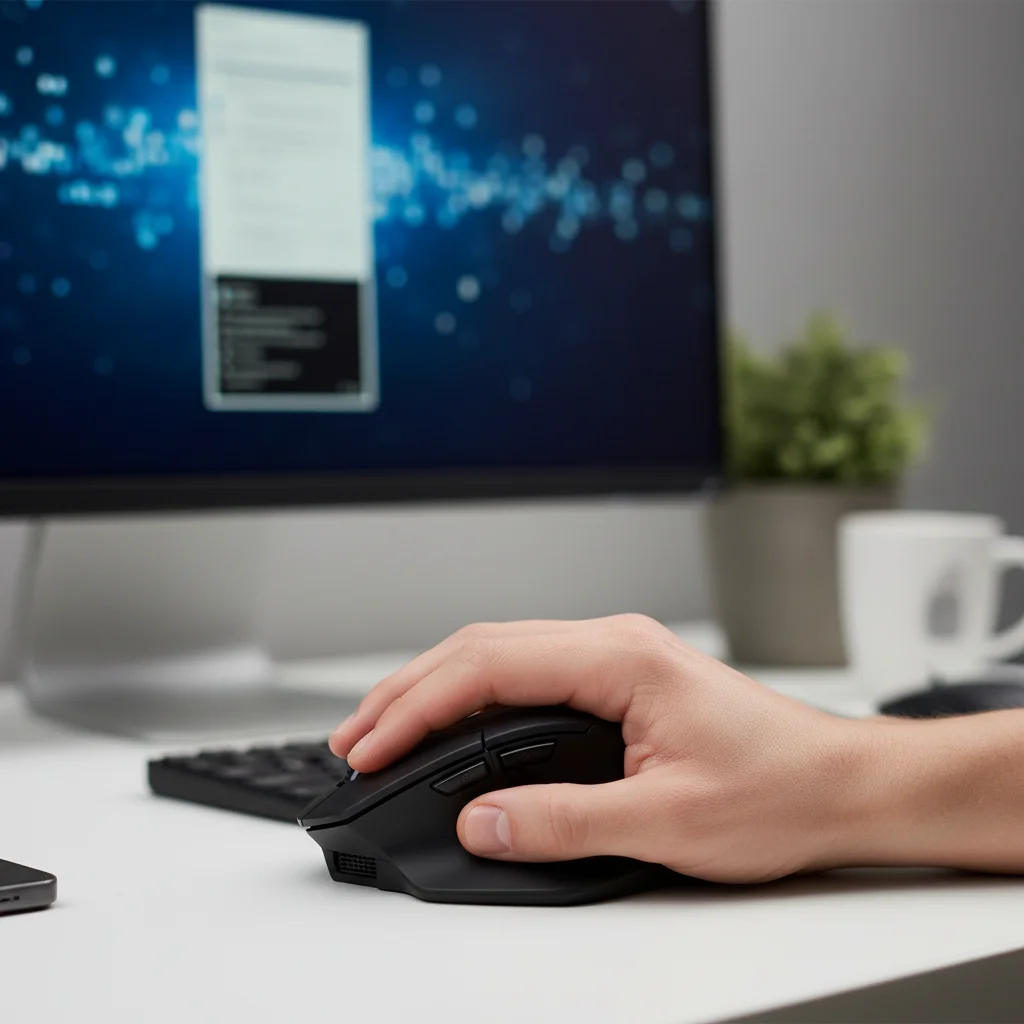
Just like your keyboard, your mouse is a constant companion in your digital workday. A traditional mouse often forces your hand and wrist into an unnatural pronated position (palm down), which can lead to discomfort in the wrist, forearm, and shoulder. An ergonomic mouse is designed to counteract this by supporting a more natural hand posture.
Why an Ergonomic Mouse is Essential:
- Natural Handshake Grip: Many ergonomic mice feature a vertical or semi-vertical design that allows your hand to rest in a more natural “handshake” position, reducing forearm twisting.
- Reduced Pressure Points: The shape of an ergonomic mouse distributes pressure more evenly across your hand, preventing localized strain.
- Prevention of Mouse Arm Syndrome: This common RSI affects the forearm and wrist, and an ergonomic mouse can significantly reduce its likelihood.
- Improved Precision: A comfortable grip can lead to better control and accuracy, enhancing your overall workflow.
What to Look for in an Ergonomic Mouse Under $40:
The market for affordable ergonomic mice is surprisingly robust. Consider these features:
- Vertical or Slanted Design: This is the hallmark of an ergonomic mouse, promoting a neutral wrist posture.
- Adjustable DPI: Allows you to change the mouse sensitivity, reducing the amount of physical movement required for cursor control.
- Programmable Buttons: While not strictly ergonomic, extra buttons can be customized for shortcuts, reducing repetitive key presses.
- Size and Fit: Ensure the mouse comfortably fits your hand size. Some models come in different sizes.
- Wired or Wireless: Similar to keyboards, both are available. Wireless offers freedom of movement, while wired ensures no battery issues.
Budget-Friendly Recommendations:
Numerous brands offer effective ergonomic mice within the $40 range. Look for vertical mice or those with a significant ergonomic curve. Read reviews to find models that are comfortable for various hand sizes and offer reliable performance. Pairing an ergonomic mouse with your ergonomic keyboard creates a powerful duo for hand and wrist health in your ergonomic home office.
3. Monitor Arm/Riser: Elevating Your Vision (Under $60)
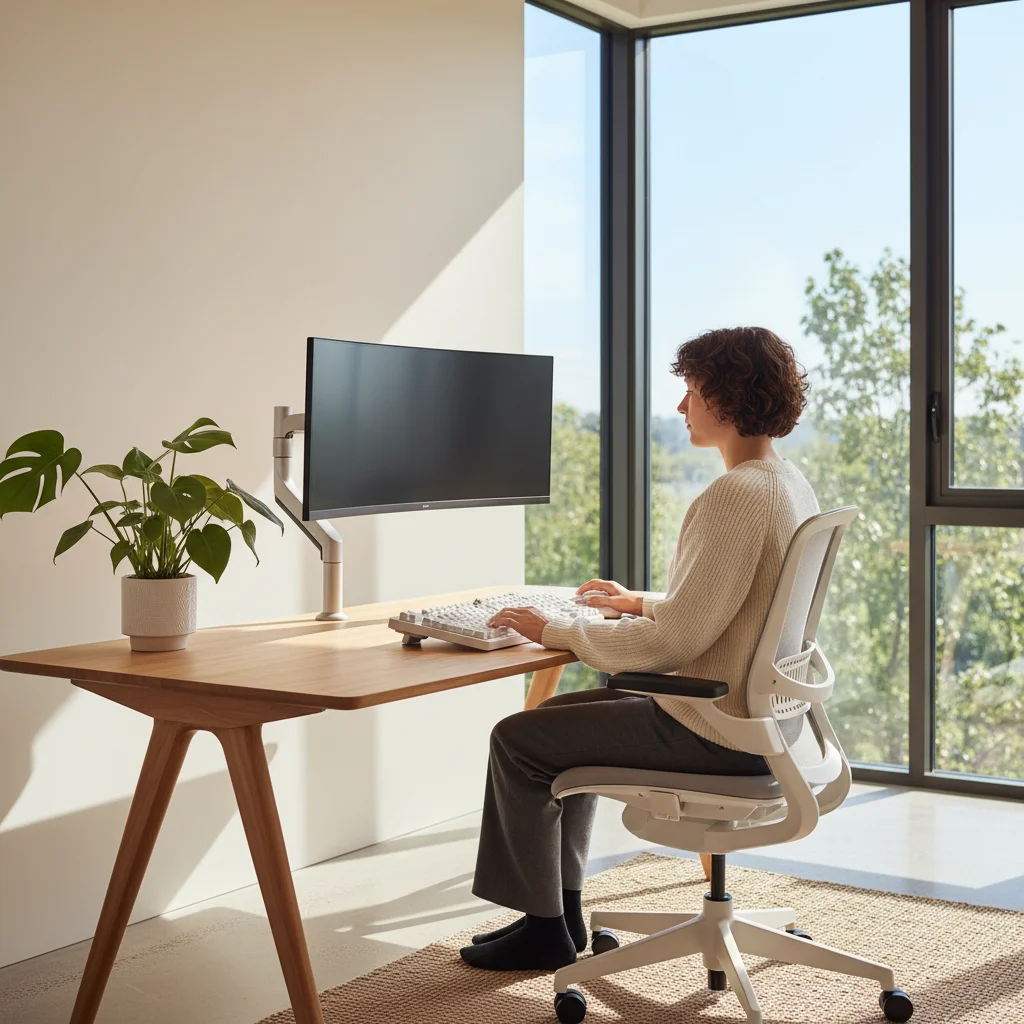
One of the most overlooked aspects of an ergonomic setup is monitor placement. Most people work with their monitor too low, forcing them to crane their necks downwards, leading to neck and shoulder pain. A monitor arm or a simple riser elevates your screen to an optimal eye level, promoting a neutral head and neck posture.
Why a Monitor Arm/Riser is Essential:
- Optimal Eye Level: Your monitor should be positioned so that the top of the screen is at or slightly below eye level, allowing your neck to remain straight.
- Reduced Neck and Shoulder Strain: Eliminates the need to look down, preventing common aches and stiffness.
- Improved Posture: By encouraging a neutral head position, it naturally supports better overall posture.
- Increased Desk Space: A monitor arm frees up valuable desk space by clamping to the edge of your desk, rather than having a bulky stand.
- Flexibility: Many monitor arms allow for easy adjustment of height, tilt, swivel, and rotation, adapting to various tasks and preferences.
What to Look for in a Monitor Arm/Riser Under $60:
While professional-grade monitor arms can be expensive, excellent single-monitor options and sturdy risers are available within our budget:
- VESA Compatibility: Ensure your monitor has VESA mounting holes (usually 75x75mm or 100x100mm) if you opt for an arm.
- Weight Capacity: Check that the arm or riser can safely support the weight of your monitor.
- Adjustability: For arms, look for height, tilt, and swivel adjustments. For risers, ensure it provides adequate height.
- Stability: Whether an arm or a riser, it must be stable and not wobble, especially when adjusting.
- Mounting Type (for arms): C-clamp mounts are common and easy to install on most desks.
Budget-Friendly Recommendations:
Solid monitor risers made of wood, metal, or even strong plastic are readily available for under $30. For monitor arms, single-monitor gas spring or mechanical arms from reputable brands can often be found in the $40-$60 range, especially during sales. These often come with C-clamp mounts and offer good adjustability. Elevating your monitor is one of the most impactful changes you can make for your ergonomic home office, directly addressing neck and eye strain.
4. Footrest: Grounding Your Ergonomics (Under $30)
Often overlooked, a footrest plays a crucial role in completing your ergonomic setup. When your feet are not flat on the floor, it can lead to pressure on your thighs, poor circulation, and lower back strain. A footrest ensures your feet are properly supported, promoting better posture and comfort.
Why a Footrest is Essential:
- Proper Leg and Foot Support: Helps maintain a 90-degree angle at your knees and ankles, which is ideal for circulation and reducing pressure on your lower back.
- Reduced Lower Back Strain: By supporting your feet, it helps maintain the natural curve of your spine.
- Improved Circulation: Prevents your legs from dangling or pressing against the chair, which can restrict blood flow.
- Adjustability for Height: Particularly useful for shorter individuals or those whose chairs don’t allow their feet to rest flat.
- Subtle Movement: Many footrests offer a rocking motion, which can encourage subtle leg movements, further improving circulation.
What to Look for in a Footrest Under $30:
Affordable and effective footrests are abundant. Focus on these features:
- Adjustable Height and Tilt: This is key to finding the perfect position for your individual needs.
- Non-Slip Surface: Ensures your feet stay put and don’t slide off.
- Sturdy Construction: Look for durable plastic or metal construction that can withstand daily use.
- Size: Ensure it’s wide enough to comfortably accommodate both your feet.
Budget-Friendly Recommendations:
You can find excellent adjustable footrests from various office supply brands and online retailers well within the $30 budget. Look for models with a textured surface and multiple height/tilt settings. A footrest is a simple yet powerful addition that significantly enhances the overall ergonomics of your ergonomic home office, providing foundational support for your entire body.
5. Lumbar Support Cushion: A Hug for Your Spine (Under $20)
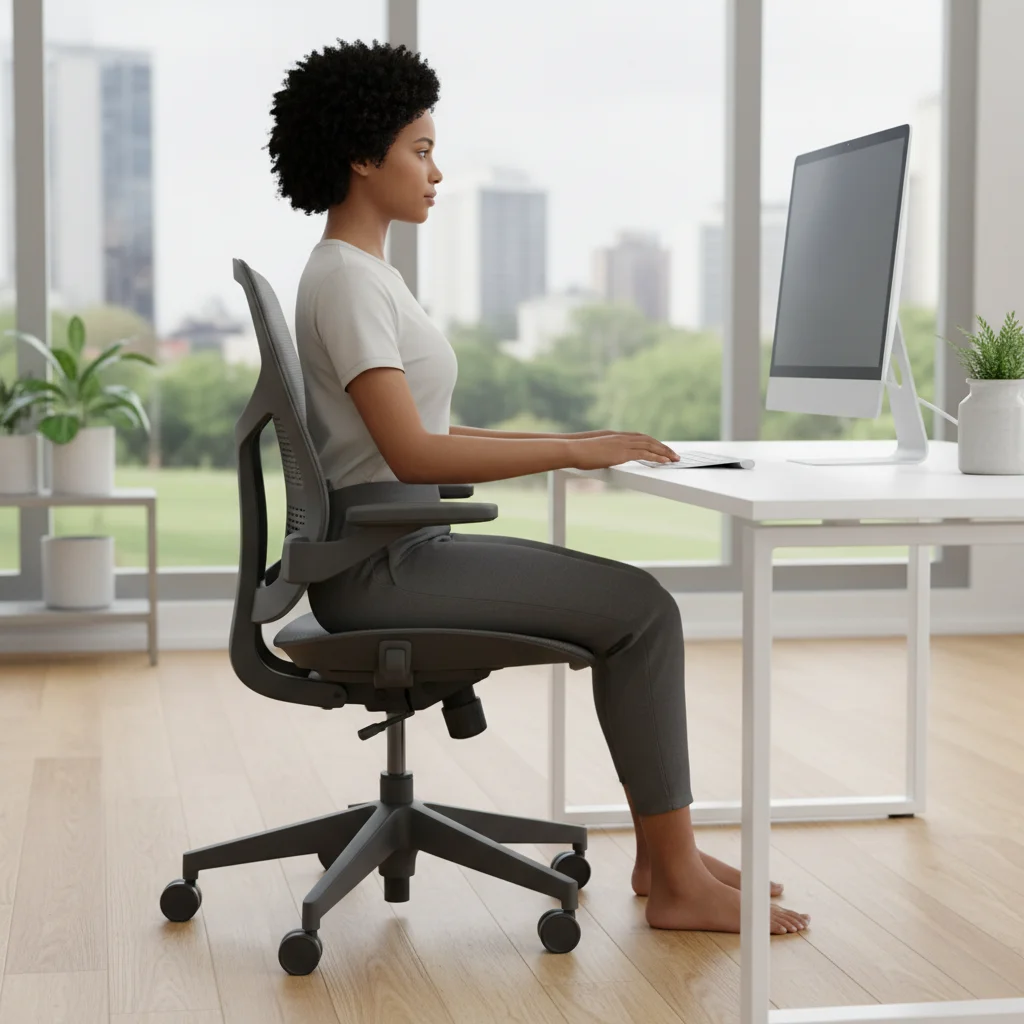
Even with a good office chair, many people struggle to maintain the natural curve of their lower spine, especially during long working hours. A lumbar support cushion fills the gap between your lower back and the chair, providing essential support to maintain the natural inward curve of your lumbar spine.
Why a Lumbar Support Cushion is Essential:
- Maintains Natural Spinal Curve: Prevents slouching and helps keep your spine in its healthy “S” shape.
- Reduces Lower Back Pain: By supporting the lumbar region, it alleviates pressure and muscle strain.
- Improves Posture: Encourages you to sit upright and reduces the tendency to slump forward.
- Portable and Versatile: Can be used with almost any chair, making it a flexible solution for different workspaces or even travel.
- Cost-Effective: Often the most affordable ergonomic upgrade with significant benefits.
What to Look for in a Lumbar Support Cushion Under $20:
Finding a quality lumbar support cushion within this budget is very achievable. Consider these factors:
- Material: Memory foam is popular for its ability to contour to your body. High-density foam is also a good option for firm support.
- Shape and Size: Look for a cushion specifically designed for lumbar support, often with a contoured shape. Ensure it’s not too bulky or too thin for your chair.
- Adjustable Straps: Straps help secure the cushion to your chair, preventing it from slipping down.
- Breathable Cover: A mesh or breathable fabric cover can prevent overheating, especially during warmer months.
Budget-Friendly Recommendations:
The market is flooded with affordable lumbar support cushions. Look for memory foam options with adjustable straps from well-reviewed brands. These can often be found for $15-$20, making them an incredibly cost-effective way to improve your ergonomic home office setup. Even if you have an “ergonomic” chair, a supplementary lumbar cushion can often provide that extra personalized support your unique spine needs.
Integrating Your Ergonomic Home Office Upgrades for Maximum Impact
Acquiring these five ergonomic essentials is just the first step. The real magic happens when you integrate them thoughtfully into your existing workspace. Each item plays a specific role, and when combined, they create a synergistic effect that elevates your overall comfort and productivity. Here’s how to ensure these upgrades deliver their full potential:
Holistic Setup Consideration:
Think of your workspace as a single unit. Your ergonomic keyboard, mouse, monitor arm, footrest, and lumbar support cushion aren’t isolated tools; they are interconnected components of a larger system designed to support your body’s natural alignment. When setting them up, consider how they interact with each other and with your body. For instance, once your monitor is at the correct height, you might find that your chair (and thus your lumbar support) needs to be adjusted. Similarly, a proper footrest can influence how your legs and hips are positioned, which in turn affects your spinal alignment and the effectiveness of your lumbar cushion.
Regular Adjustments and Self-Assessment:
Ergonomics is not a one-time setup; it’s an ongoing process of adjustment and self-assessment. Your body posture might change throughout the day, or you might switch between different tasks that require slightly different positions. Take a few moments each day to consciously check your posture:
- Are your feet flat on the footrest or floor, with knees at a 90-degree angle?
- Is your lower back supported by the lumbar cushion, maintaining its natural curve?
- Are your elbows at approximately a 90-100 degree angle when typing with your ergonomic keyboard?
- Are your wrists straight and neutral when using your ergonomic mouse?
- Is the top of your monitor screen at or slightly below eye level, preventing neck strain?
Don’t be afraid to fine-tune the settings of your monitor arm, footrest, or even the placement of your keyboard and mouse. Small adjustments can make a big difference in sustained comfort and prevent the gradual onset of discomfort. Your ergonomic home office should feel like an extension of your body, not a source of resistance.
Breaks and Movement:
Even the most perfectly ergonomic setup cannot negate the importance of regular breaks and movement. Integrate short stretching breaks every 30-60 minutes. Stand up, walk around, do some light stretches for your neck, shoulders, and wrists. These micro-breaks help to re-energize your body, improve circulation, and prevent muscle stiffness, complementing the benefits of your ergonomic tools. Remember, static posture, even a good one, can still lead to fatigue over time.
Lighting and Environment:
While not directly part of our $200 ergonomic upgrades, proper lighting and a conducive environment are crucial for a truly productive and healthy ergonomic home office. Ensure your workspace is well-lit, preferably with natural light, to reduce eye strain. Minimize glare on your screen. Keep your workspace tidy and organized to reduce mental clutter and improve focus. These environmental factors work hand-in-hand with your ergonomic tools to create an optimal working atmosphere.
The Long-Term Benefits of an Ergonomic Home Office
The initial investment in these ergonomic upgrades, even a modest one under $200, pays dividends far beyond the immediate comfort. Consider the long-term benefits:
- Reduced Healthcare Costs: Preventing RSIs and chronic pain can save you significant medical expenses and lost workdays in the future.
- Increased Longevity in Your Career: A healthy body allows you to continue working comfortably and effectively for many years to come.
- Sustainable Productivity: By minimizing physical discomfort, you can maintain higher levels of concentration and output throughout your workday and career.
- Enhanced Well-being: A comfortable and pain-free body contributes to better mood, reduced stress, and an overall higher quality of life, both in and out of work.
- Professionalism and Focus: A dedicated and well-equipped workspace reinforces a professional mindset, even when working from home.
In 2026, as work patterns continue to evolve, prioritizing your health and well-being in your ergonomic home office is not just a trend; it’s a fundamental aspect of sustainable professional life. These five affordable upgrades demonstrate that you don’t need a massive budget to make a significant positive impact on your daily work experience.
Conclusion: Your Path to a Healthier, More Productive Home Office
Creating an ergonomic home office doesn’t have to be an overwhelming or expensive endeavor. By strategically investing in these five essential upgrades – an ergonomic keyboard, an ergonomic mouse, a monitor arm or riser, a footrest, and a lumbar support cushion – all collectively under $200, you can dramatically improve your comfort, health, and productivity. These tools are not just accessories; they are vital components that support your body’s natural mechanics, prevent strain, and foster a more efficient working environment.
As remote work continues to shape our professional lives in 2026 and beyond, the importance of a well-designed workspace will only grow. Take the initiative to transform your home office into a space that nurtures your well-being and empowers your best work. Start with these affordable, high-impact changes, and experience the profound difference an ergonomic home office can make. Your body and your productivity will thank you.