Wireless Charging 2.0: US Standards & Devices for 2026
Wireless Charging 2.0: The Latest US Standards and Devices for 2026
The dawn of a truly wire-free world is closer than ever, thanks to the rapid evolution of wireless charging technology. For years, we’ve dabbled with inductive charging pads, often characterized by finicky alignment and slow speeds. However, the landscape is dramatically shifting with the advent of Wireless Charging 2.0, promising a revolution in how we power our devices. This next generation of wireless power is not just an incremental upgrade; it represents a fundamental leap forward in efficiency, speed, and versatility, driven by new US standards and an explosion of innovative devices hitting the market by 2026.
As we delve into the intricacies of this transformative technology, we’ll explore the foundational principles, the key players shaping its future, and what consumers can expect from their devices and environments in the coming years. From smartphones and wearables to electric vehicles and smart home appliances, Wireless Charging 2.0 is set to redefine convenience and connectivity.
The Evolution of Wireless Charging: From Qi to Wireless Charging 2.0
To truly appreciate the significance of Wireless Charging 2.0, it’s essential to understand its lineage. The first widely adopted standard, Qi (pronounced ‘chee’), laid the groundwork for inductive wireless power transfer. Introduced by the Wireless Power Consortium (WPC), Qi brought a modicum of convenience, allowing devices to charge by simply resting on a pad. However, Qi had its limitations: it required precise alignment, was relatively slow, and its efficiency dropped significantly with even small distances between the coil and the device.
The limitations of early Qi spurred innovation, leading to the development of more advanced techniques. While various proprietary solutions emerged, the industry recognized the need for a unified, improved standard. This recognition culminated in the development of Wireless Charging 2.0, an umbrella term that largely encompasses the advancements brought by the latest iterations of the Qi standard, particularly Qi2, and other emerging technologies like magnetic resonance.
Wireless Charging 2.0 addresses the shortcomings of its predecessors by focusing on several key areas:
- Magnetic Power Profile (MPP): This is perhaps the most significant advancement. Based on Apple’s MagSafe technology, MPP integrates magnets into both the charger and the device, ensuring perfect alignment every time. This magnetic coupling not only boosts charging efficiency but also allows for faster charging speeds and a more secure connection.
- Increased Power Delivery: While original Qi was often limited to 5W or 7.5W, Wireless Charging 2.0 standards are pushing towards 15W, 30W, and even higher power outputs for a wider range of devices, including laptops.
- Spatial Freedom: Beyond simple contact charging, Wireless Charging 2.0 explores technologies like magnetic resonance, which allows for charging over greater distances and with more spatial freedom, meaning devices don’t have to be in direct contact or perfectly aligned.
- Enhanced Safety and Interoperability: New standards incorporate more robust safety features and aim for universal compatibility across brands and device types, reducing e-waste and consumer confusion.
The widespread adoption of Wireless Charging 2.0, particularly Qi2, is expected to accelerate significantly by 2026, becoming the de facto standard for a vast array of consumer electronics.
Key US Standards Driving Wireless Charging 2.0
The United States plays a crucial role in shaping global technology standards, and wireless charging is no exception. While international bodies like the WPC define the core technical specifications, US regulatory bodies and industry leaders heavily influence adoption and implementation. By 2026, several key standards and initiatives will solidify the dominance of Wireless Charging 2.0:
The Prominence of Qi2 in the US Market
Qi2 is undoubtedly the most impactful standard for Wireless Charging 2.0 in the immediate future. Developed by the Wireless Power Consortium (WPC) with significant input from companies like Apple, Qi2 builds on the existing Qi standard but integrates the Magnetic Power Profile (MPP). This magnetic alignment technology, akin to MagSafe, ensures perfect coil-to-coil contact, drastically improving efficiency and enabling faster charging.
In the US, the rollout of Qi2-certified devices and chargers began in late 2023 and is expected to be near-universal for new smartphones, smartwatches, and earbuds by 2026. This standardization means:
- Guaranteed Performance: Consumers can expect consistent charging speeds and efficiency from any Qi2-certified product, regardless of brand.
- Enhanced User Experience: The magnetic alignment eliminates the frustration of misaligned devices and failed charging attempts.
- Broader Compatibility: While MagSafe was initially proprietary, Qi2 opens up this superior charging experience to a wider ecosystem of Android devices and accessories.
The Federal Communications Commission (FCC) in the US plays a critical role in approving wireless power transfer devices for sale. As Qi2 devices become more prevalent, the FCC’s certification processes will ensure that these products meet safety and electromagnetic interference (EMI) standards. This regulatory oversight is crucial for consumer confidence and market stability.
Beyond Inductive: Magnetic Resonance and Far-Field Charging
While Qi2 focuses on improved inductive charging, Wireless Charging 2.0 also encompasses more futuristic technologies. Magnetic resonance charging, for instance, allows power transfer over greater distances (several centimeters to a few meters) and through non-metallic materials. This opens up possibilities for:
- Charging multiple devices simultaneously on a desk or table without precise placement.
- Embedding chargers invisibly within furniture or countertops.
- Charging devices in motion, such as robots or automated guided vehicles (AGVs).
Companies like Ossia (Cota) and Energous (WattUp) are leading the charge in developing true far-field wireless power, which could potentially charge devices across a room. While still largely in the developmental and regulatory approval stages for widespread consumer use, significant progress is anticipated by 2026, especially for niche industrial applications and very low-power devices. The FCC has already approved some limited applications of these technologies, and further approvals for broader use cases are expected as the technology matures and safety protocols are solidified.
Standardization for Higher Power and Industrial Applications
Wireless Charging 2.0 isn’t just for small gadgets. There’s a growing push for standards supporting higher power levels, crucial for laptops, power tools, and even electric vehicles. The WPC, alongside other industry consortiums, is developing specifications for:
- Medium Power Wireless Charging: Aimed at laptops and other devices requiring 50W to 200W.
- High Power Wireless Charging: Designed for industrial machinery, medical equipment, and electric vehicles, potentially reaching kilowatts of power.
These standards require more robust safety mechanisms, efficient heat dissipation, and careful management of electromagnetic fields. US industry players are actively participating in these global standardization efforts, ensuring that future high-power wireless charging solutions are compatible and safe for the American market.
Innovative Devices Defining Wireless Charging 2.0 by 2026
The true impact of Wireless Charging 2.0 will be seen in the devices that adopt these new standards. By 2026, the market will be flooded with an array of innovative products designed from the ground up to leverage the benefits of faster, more efficient, and more versatile wireless power.
Smartphones and Wearables: The Frontrunners
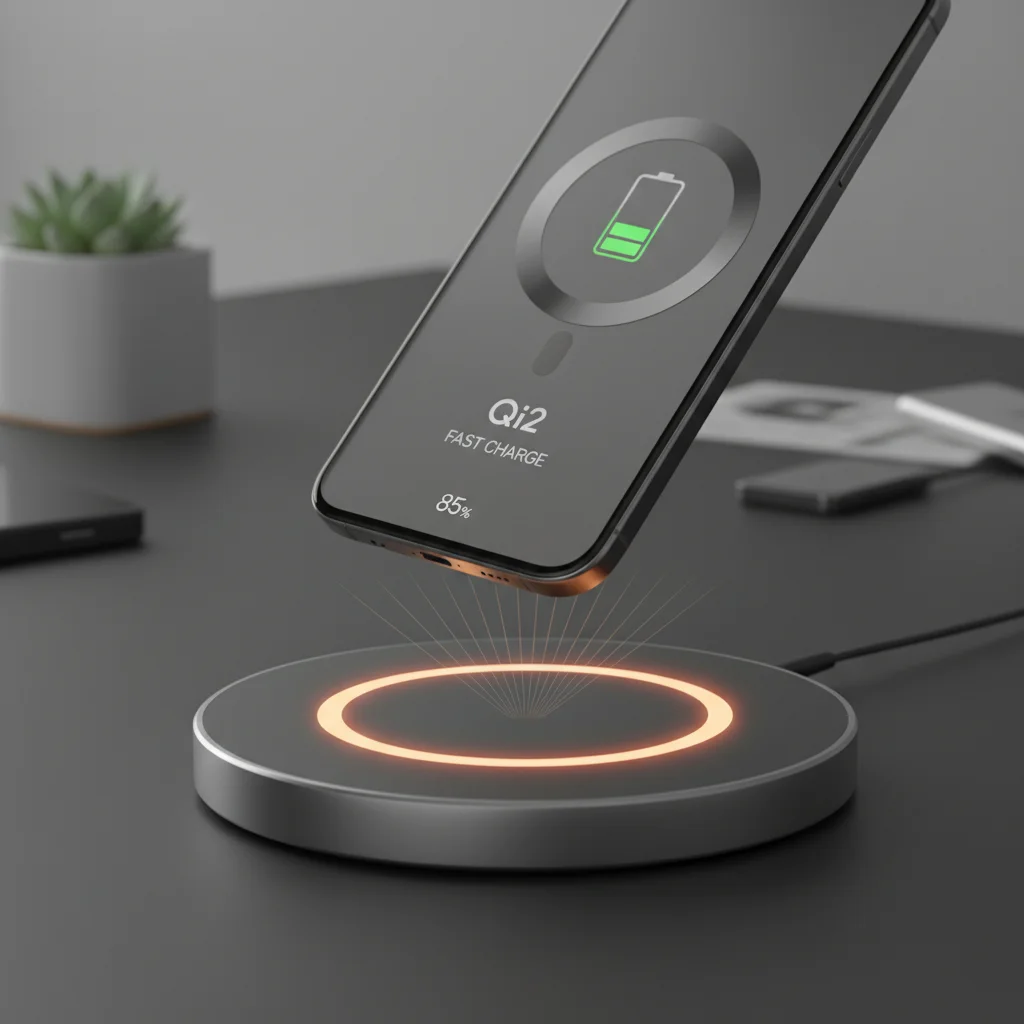
Smartphones and wearables will continue to be the primary beneficiaries of Wireless Charging 2.0. With Qi2 becoming standard, expect:
- Universal Magnetic Charging: Most new high-end and mid-range smartphones will feature magnetic alignment for faster 15W charging, making proprietary solutions less appealing.
- Integrated Charging: Smartwatches and earbuds will seamlessly snap onto charging pads, often integrated into laptop docks, car mounts, or smart home hubs.
- Reverse Wireless Charging Enhancements: Devices will more efficiently share power with each other, allowing a smartphone to charge earbuds or a smartwatch with greater speed and less heat.
The magnetic attachment of Qi2 will also enable a new ecosystem of accessories, from car mounts that double as chargers to modular battery packs that securely attach to your phone.
Smart Home and Office Integration
The smart home is ripe for a wireless charging revolution. By 2026, expect to see:
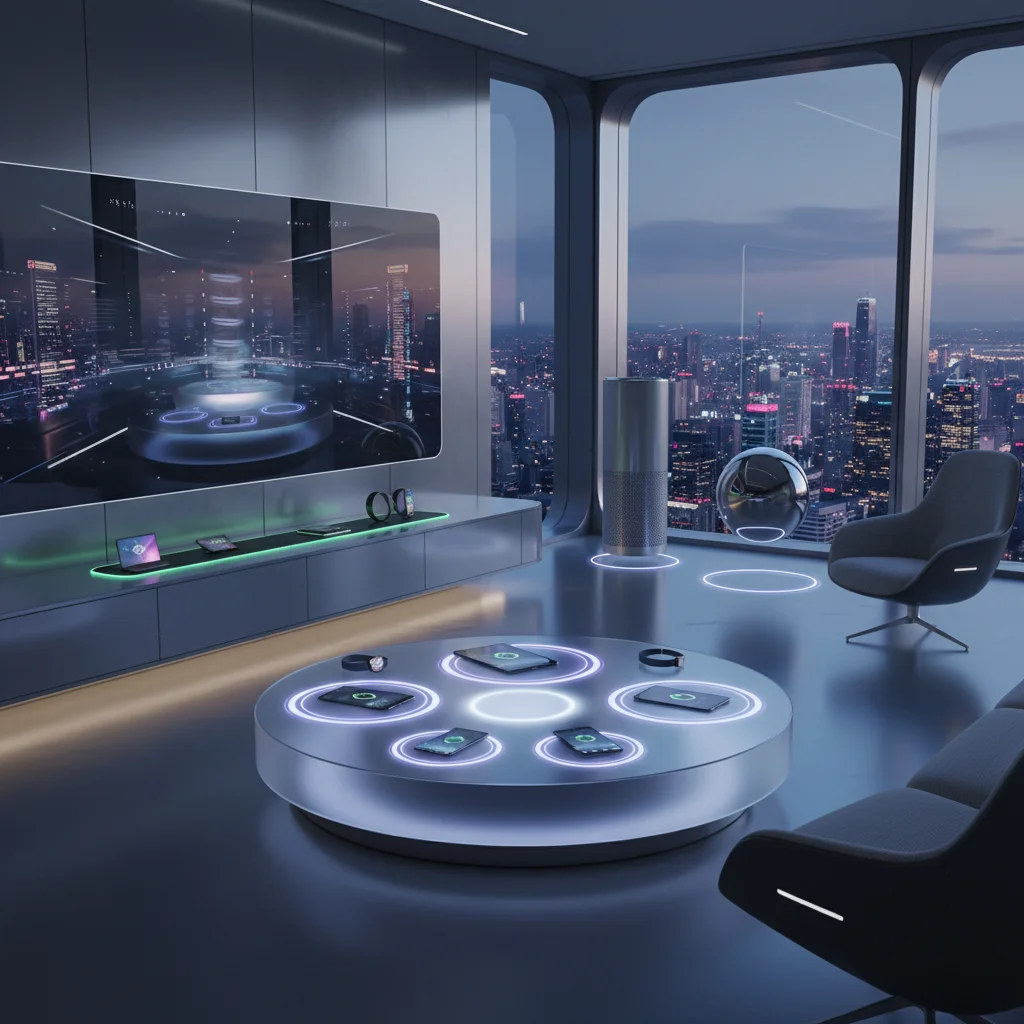
- Wireless Charging Furniture: Desks, nightstands, and kitchen islands with integrated Qi2 charging zones, allowing devices to charge seamlessly without clutter.
- Smart Home Hubs with Advanced Charging: Devices like smart speakers or displays will not only act as control centers but also as central charging points for all your small gadgets.
- Battery-Free Smart Devices: Low-power sensors, smart locks, or even remote controls could be powered continuously by ambient wireless energy (far-field charging), eliminating the need for batteries altogether.
- Wireless Powered Appliances: Imagine small kitchen appliances like blenders or coffee makers powered wirelessly from a countertop, offering greater flexibility and safety.
The office environment will also transform, with conference tables and workstations featuring embedded wireless charging, allowing laptops (with higher power Qi2 or resonant charging) and smartphones to stay powered throughout the day.
Electric Vehicles (EVs) and Public Infrastructure
Perhaps one of the most exciting applications of Wireless Charging 2.0 is in the electric vehicle sector. While still in its nascent stages, significant strides are expected by 2026:
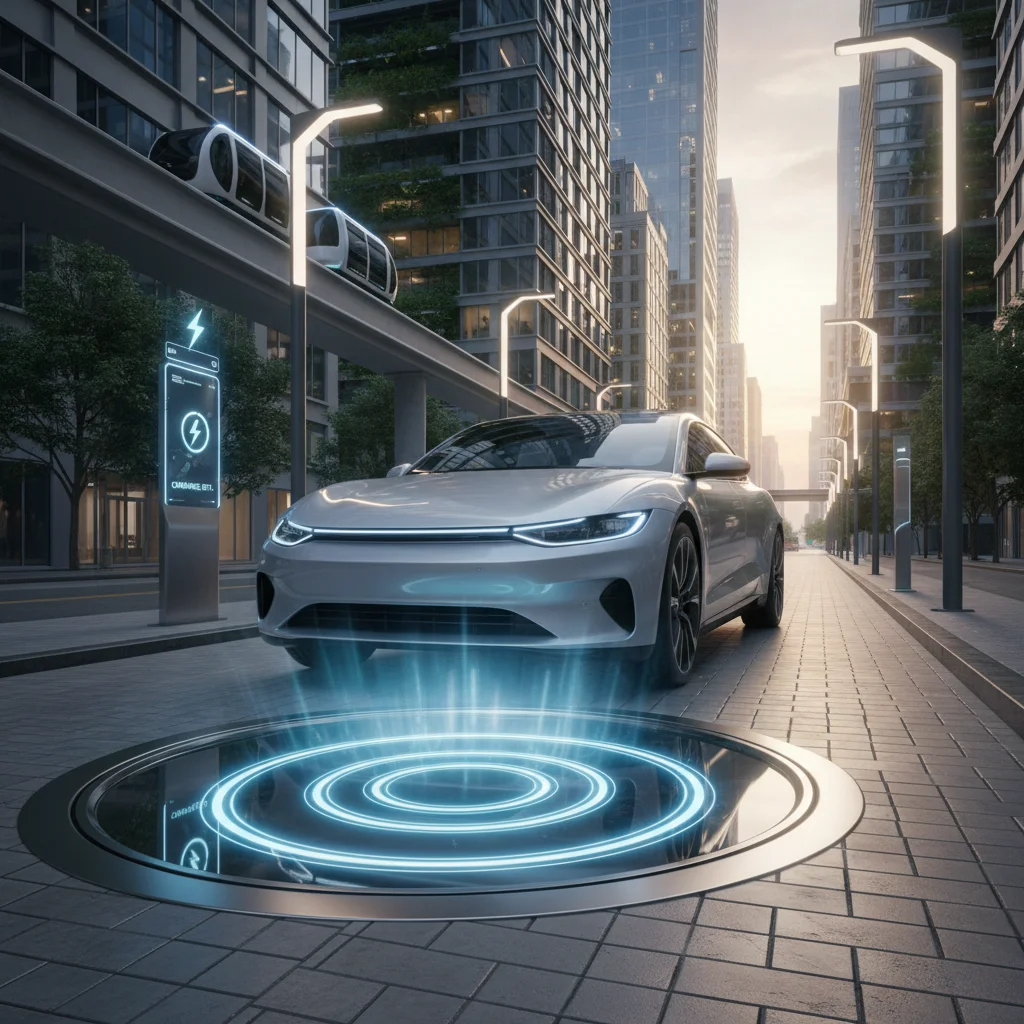
- Wireless EV Charging Pads: Imagine simply parking your EV over a designated spot in your garage or a public parking lot, and it begins charging automatically, completely eliminating the need for cables. Several companies are already piloting such systems.
- Dynamic Wireless Charging: Even more ambitious, dynamic wireless charging involves embedding coils beneath roads, allowing EVs to charge while driving. While a full rollout by 2026 is unlikely, pilot projects and initial deployments in specific lanes or bus routes could begin to emerge, particularly in urban areas.
- Standardization for EV Wireless Charging: Organizations like SAE International are working on standards (e.g., SAE J2954) for wireless power transfer for EVs, ensuring interoperability between different car manufacturers and charging infrastructure providers. This standardization is crucial for widespread adoption in the US.
The convenience and safety benefits of wireless EV charging are immense, removing hazards associated with cables and making charging more accessible for all drivers.
Industrial and Medical Applications
Beyond consumer electronics, Wireless Charging 2.0 is set to revolutionize industrial and medical fields:
- Robotics and AGVs: Autonomous robots and guided vehicles in factories and warehouses can charge efficiently and automatically at designated spots, minimizing downtime.
- Medical Implants and Devices: Wireless power can enable safer, more convenient charging for medical implants, reducing the risk of infection associated with percutaneous wires. External medical devices can also benefit from seamless and hygienic charging.
- Hazardous Environments: In environments where sparks are dangerous, or connections are difficult to maintain (e.g., underwater, explosive atmospheres), wireless power offers a safer and more reliable solution.
These specialized applications often have unique regulatory and safety requirements, which US agencies are actively addressing as the technology evolves.
Challenges and Considerations for Widespread Adoption
While the future of Wireless Charging 2.0 looks bright, several challenges and considerations need to be addressed for its widespread adoption by 2026 and beyond.
Cost and Infrastructure
The initial cost of implementing Wireless Charging 2.0 infrastructure, especially for high-power applications like EV charging or embedding into furniture, can be significant. Manufacturers need to balance innovation with affordability to drive consumer adoption. Furthermore, the retrofitting of existing homes, offices, and public spaces will require substantial investment.
Efficiency and Heat Generation
While Wireless Charging 2.0 standards like Qi2 significantly improve efficiency over early Qi, wireless power transfer inherently involves some energy loss, often dissipated as heat. Managing heat generation is crucial for device longevity and user safety, especially as power levels increase. Ongoing research focuses on optimizing coil designs, materials, and power management circuits to minimize these losses.
Electromagnetic Interference (EMI) and Safety
Any technology involving electromagnetic fields raises concerns about EMI with other electronic devices and potential health effects. US regulatory bodies like the FCC rigorously test wireless charging products to ensure they operate within safe limits and do not interfere with critical systems. As power levels and transmission distances increase, these safety standards will become even more stringent. Public perception and education about the safety of these technologies will also be vital.
Interoperability and Fragmentation
While Qi2 aims to unify smartphone charging, the broader Wireless Charging 2.0 landscape still faces potential fragmentation. Different standards might emerge for specific applications (e.g., high-power industrial vs. low-power medical). Ensuring seamless interoperability across various devices and ecosystems will be crucial to avoid consumer confusion and foster widespread adoption. The WPC’s efforts to expand Qi beyond just smartphones are a positive step in this direction.
Security and Data Transfer
As wireless charging becomes more integrated, especially in smart environments, the potential for combining power transfer with data transfer (e.g., NFC-like authentication for charging access) emerges. This introduces new security considerations that need to be addressed to prevent unauthorized access or data breaches.
The Economic and Environmental Impact
The widespread adoption of Wireless Charging 2.0 is expected to have significant economic and environmental implications.
Economic Growth and Innovation
The development and deployment of Wireless Charging 2.0 will spur innovation across various industries. New companies will emerge, and existing ones will adapt, leading to job creation in R&D, manufacturing, infrastructure development, and service sectors. The convenience factor could also drive increased sales of compatible devices and accessories.
Reduced E-Waste
A unified standard like Qi2 can help reduce electronic waste by promoting interoperability. Consumers will be able to use the same charging pads for multiple devices and across different brands, potentially reducing the number of redundant chargers and cables purchased and discarded. The move towards embedded charging in furniture and vehicles also reduces the need for discrete charging accessories.
Energy Consumption and Sustainability
While wireless charging inherently involves some energy loss, advancements in efficiency mean that the overall impact on energy consumption might be manageable. Furthermore, the convenience of wireless charging could encourage better charging habits, potentially leading to devices being topped up more frequently and efficiently rather than being fully discharged and then rapidly charged, which can be detrimental to battery health. The long-term vision of powering devices without individual chargers could lead to a more sustainable tech ecosystem.
Looking Ahead to 2026 and Beyond
By 2026, Wireless Charging 2.0 will likely be a ubiquitous feature in our daily lives. We can anticipate a world where:
- Every new smartphone and wearable sold in the US supports Qi2 for fast, magnetic alignment charging.
- An increasing number of cars, both electric and traditional, offer integrated wireless charging pads for phones.
- Public spaces like airports, coffee shops, and offices will feature embedded wireless charging zones.
- Select smart home devices will begin to draw power wirelessly from ambient sources or embedded furniture.
- Early adopters of wireless EV charging will be experiencing the convenience of automatic power delivery in their garages and select public areas.
The journey to a truly wire-free world is complex, involving technological breakthroughs, regulatory approvals, and consumer adoption. However, with the robust standards now in place and the rapid pace of innovation, Wireless Charging 2.0 is poised to transform our relationship with power, making our digital lives more seamless, efficient, and convenient than ever before.
The next few years will be critical in solidifying these advancements, and the US market will undoubtedly be a key driver in shaping this exciting future. Prepare to say goodbye to tangled cables and embrace the effortless power of Wireless Charging 2.0.